Your cart is empty
Tax included and shipping calculated at checkout

Drawer menu
Tax included and shipping calculated at checkout

Luxury organic skincare represents a category of premium formulations that prioritize botanical ingredients while maintaining high efficacy standards. These products combine certified organic botanicals with clinical-grade actives, creating skincare solutions that deliver visible results without synthetic fragrances, parabens, or sulfates. The distinction lies not just in ingredient sourcing but in the formulation philosophy: luxury organic skincare treats natural and clean beauty as complementary, not contradictory.
The foundation of true luxury organic skincare rests on transparency and certification. Brands in this space typically pursue third-party certifications like USDA Organic or EcoCert, which verify that ingredients meet strict standards for purity and sustainable harvesting. This certification process ensures you're not paying premium prices for marketing language alone. At Giluxe, we understand that luxury means delivering botanical-infused formulas that perform at the level consumers expect from high-end skincare while maintaining unwavering commitment to organic sourcing and clean ingredient lists.
What separates luxury organic skincare from conventional premium skincare is the refusal to compromise on either front. These formulations avoid synthetic fragrance, mineral oil, and silicone-based fillers that create temporary smoothness without nourishing skin. Instead, they rely on cold-pressed oils, phytonutrients, and antioxidant-rich plant extracts that support skin barrier repair and cellular turnover. The result is skincare that feels luxurious in application while delivering measurable improvements in skin texture, radiance, and resilience over time.
Uneven skin tone represents one of the most persistent skincare concerns, driven by hyperpigmentation, post-acne marks, and oxidative stress. Natural skincare approaches address this through botanical actives that work with your skin's biology rather than against it. Key ingredients like kojic acid (derived from fermented fungi), turmeric, and vitamin C from plant sources target melanin production without the irritation associated with synthetic brightening agents.
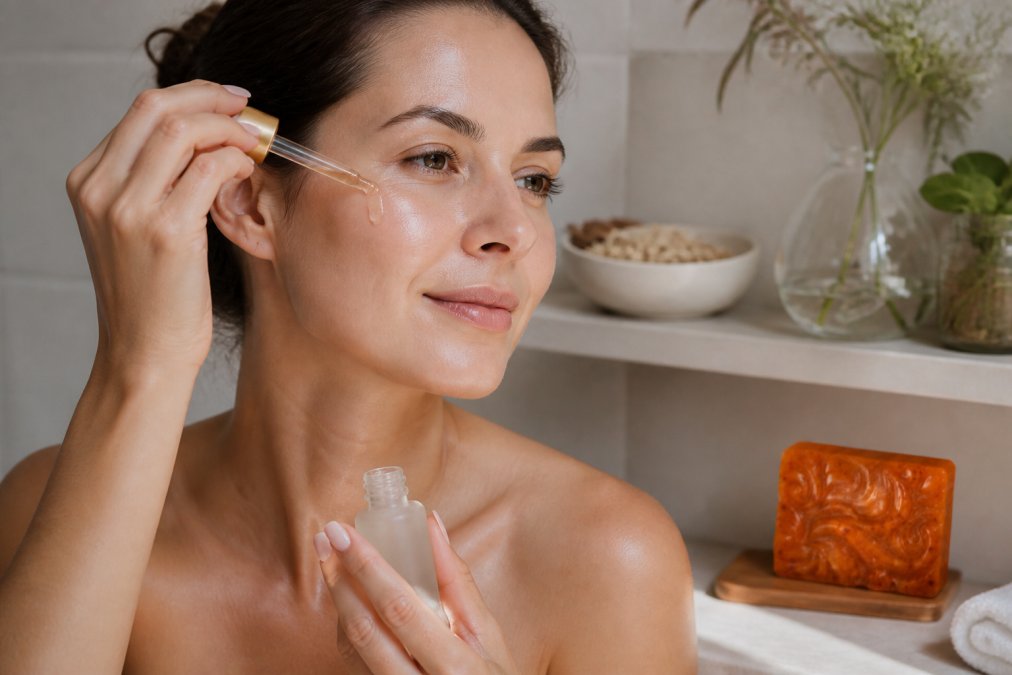
The mechanism here matters less than the outcome: botanical formulations work gradually but sustainably. Turmeric contains curcumin, a compound with natural anti-inflammatory properties that can reduce the appearance of post-inflammatory hyperpigmentation (peer-reviewed research). Kojic acid gently inhibits tyrosinase, the enzyme responsible for melanin synthesis, without the harshness of hydroquinone. When these ingredients are combined in a well-formulated serum or cleanser, results typically emerge over 6-8 weeks of consistent use.
Giluxe's Radiance Facial Cleansing Soap combines these actives strategically. The formula includes kojic acid for brightening, turmeric for inflammation reduction, jojoba oil for skin barrier support, tea tree oil for clarity, and vitamin E for antioxidant protection. This combination addresses uneven tone from multiple angles: preventing new discoloration while gently fading existing marks. The cleanser removes impurities and dead surface skin cells that can exacerbate dull, uneven appearance, creating the foundation for more effective treatment serums.

When selecting natural skincare for tone correction, prioritize products that combine multiple botanical actives rather than relying on a single ingredient. Single-ingredient solutions rarely deliver the comprehensive approach needed for visible results. Look for formulations where botanical extracts are listed early in the ingredient deck, indicating meaningful concentration levels.
Organic anti-aging skincare succeeds through bio-active botanical compounds that stimulate collagen production, accelerate cellular turnover, and neutralize free radical damage. These ingredients work differently than synthetic alternatives, but the clinical outcomes, reduced fine lines, improved elasticity, enhanced firmness, remain measurable and significant.
Retinol alternatives derived from plants, such as bakuchiol, have emerged as game-changers in organic anti-aging formulations. Bakuchiol delivers retinol-like benefits (increased cell turnover, collagen stimulation, fine line reduction) without the irritation, photosensitivity, or pregnancy contraindications of synthetic retinol (peer-reviewed research). This makes it ideal for sensitive skin and daytime use. Peptides sourced from plant-based hydrolyzed proteins support skin firmness by signaling collagen synthesis, while hyaluronic acid (naturally derived from fermented sources) provides the hydration foundation that makes all other actives more effective.
Polyphenol-rich plant extracts, resveratrol from grapes, EGCG from green tea, ellagic acid from berries, function as powerful antioxidants that protect skin from oxidative stress and environmental damage. These compounds don't just prevent aging; they actively repair damage already present. When formulated at therapeutic concentrations in luxury organic skincare products, they produce visible improvements in skin texture and radiance within 4-6 weeks.
The critical distinction in organic anti-aging skincare is concentration and stability. Many brands use botanical extracts as window dressing at trace levels. Legitimate luxury organic skincare invests in stabilized, concentrated forms of these actives to ensure they remain potent through shelf life. This is why price matters: formulating with meaningful concentrations of stabilized plant-based actives costs significantly more than using diluted extracts or synthetic alternatives.
An effective organic skincare routine follows a logical sequence that maximizes ingredient efficacy while respecting your skin's barrier function. The foundation remains consistent: cleanse, treat, hydrate, protect. Within this framework, organic products excel because botanical ingredients work synergistically rather than competing for attention.
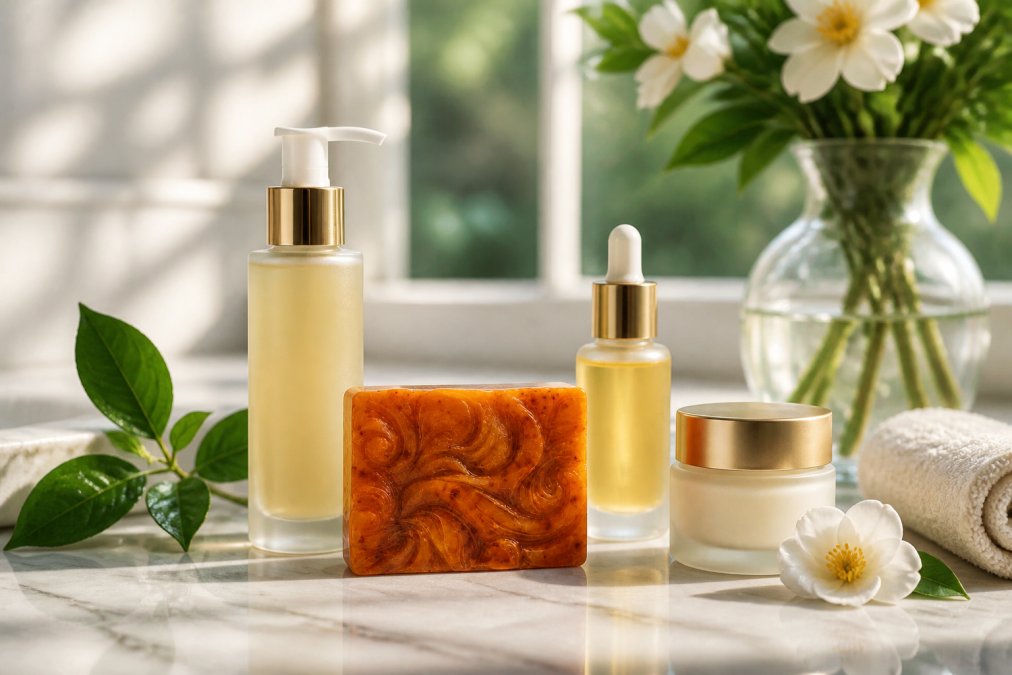
Start with a gentle cleanser that removes impurities without stripping natural oils. Giluxe's Radiance Facial Cleansing Soap works here because it cleanses effectively while the included botanical actives begin addressing specific concerns (brightening, clarity, barrier support) from the first step. This dual-purpose approach is characteristic of luxury organic skincare: each product layer builds on the last rather than requiring a separate treatment product.

After cleansing, apply targeted serums while skin is still slightly damp. Serums in organic formulations typically feature concentrated botanical extracts, cold-pressed oils, or plant-derived peptides. This step is where you address specific concerns, uneven tone, fine lines, hydration deficits. The moisture on your skin helps these actives penetrate and distribute evenly.
Follow with a moisturizer that seals in hydration and provides additional nourishment. Organic moisturizers typically feature botanical oils (jojoba, argan, rosehip), plant-derived ceramides, and hydrating humectants like glycerin or hyaluronic acid. The moisturizer's role is stabilization: it locks in the benefits of your serum while supporting skin barrier integrity.
Step |
Product Type |
Primary Function |
Frequency |
|---|---|---|---|
1 |
Cleanser |
Remove impurities, begin treatment |
Twice daily |
2 |
Serum |
Deliver concentrated actives |
Once or twice daily |
3 |
Moisturizer |
Seal hydration, support barrier |
Twice daily |
4 |
SPF (daytime only) |
Protect from UV damage |
Once daily |
The sequence matters because it respects molecular weight and ingredient compatibility. Lighter serums penetrate before heavier oils; water-based products layer before oil-based ones. This isn't arbitrary, it's how you ensure each product delivers its intended benefit rather than sitting on the surface.
Sustainability separates authentic luxury organic skincare from greenwashing. True commitment means transparent sourcing practices, regenerative agriculture partnerships, and packaging that reflects environmental values. When a brand invests in these areas, it's visible in pricing and product documentation.
Ethical sourcing begins with traceability. Luxury organic brands should document where botanical ingredients originate, how they're harvested, and whether suppliers practice fair labor standards. This transparency costs money, it requires supply chain infrastructure most brands avoid. Brands committed to luxury organic skincare maintain direct relationships with botanical suppliers, often visiting farms to verify growing practices and ensure farmers receive fair compensation.
Regenerative agriculture represents the next tier of sustainability commitment. Unlike conventional organic farming (which avoids synthetic inputs but doesn't actively improve soil), regenerative practices rebuild soil health, increase biodiversity, and sequester carbon. Brands sourcing from regenerative farms contribute to ecosystem restoration rather than simply avoiding harm. This approach produces superior botanical ingredients because healthier soil creates more nutrient-dense plants.
Packaging sustainability matters equally. Luxury organic skincare brands increasingly use glass containers (recyclable indefinitely), aluminum (infinitely recyclable), or compostable materials rather than plastic. Refillable systems reduce waste further. Sustainable packaging costs more than conventional plastic, which is why premium pricing reflects genuine commitment rather than mere marketing.
According to FDA guidance on cosmetic ingredient safety, botanical ingredients require the same safety documentation as synthetic alternatives. This means legitimate luxury organic brands invest in third-party testing and safety validation, adding to production costs. Transparency about these certifications, visible on packaging or brand websites, indicates genuine commitment to both safety and sustainability.
Selecting luxury organic skincare requires matching formulation philosophy to your skin's specific needs. Oily skin, for example, benefits from lightweight serums featuring non-comedogenic botanical oils like jojoba or rosehip, while dry skin requires richer formulations with emollient plant butters and occlusive oils. The difference isn't about quality, it's about ingredient selection within the organic framework.
For oily or acne-prone skin, prioritize formulations with tea tree oil, salicylic acid derived from willow bark, or clay-based cleansers. These botanical actives regulate sebum without over-drying. Gel-based moisturizers with hyaluronic acid provide necessary hydration without heaviness. Avoid rich plant butters and heavy oils that can trigger congestion.
Sensitive skin thrives with minimal formulations featuring soothing botanicals like chamomile, calendula, and centella asiatica. These ingredients calm inflammation and support barrier repair without irritation. Look for products free from essential oils (which can trigger sensitivity despite being natural) and featuring gentle cleansers that preserve the skin microbiome. Giluxe formulations are designed with this consideration: the Radiance Facial Cleansing Soap includes soothing jojoba oil and vitamin E alongside active ingredients, making it suitable for sensitive skin while still delivering brightening benefits.
Combination skin benefits from layered approaches: lightweight serums targeting oily zones, richer moisturizers on dry areas. The flexibility of luxury organic skincare allows this customization. Choose a cleanser that removes excess oil without stripping, a targeted serum for specific concerns, and a moisturizer you can apply selectively based on daily skin conditions.
Mature skin requires formulations emphasizing collagen support, cellular turnover acceleration, and deep hydration. Look for products featuring plant-derived peptides, botanical retinol alternatives, and concentrated antioxidant extracts. These ingredients address fine lines, loss of elasticity, and uneven tone simultaneously. The botanical approach works well for mature skin because these formulations typically avoid harsh actives that can compromise a more delicate skin barrier.
Botanical formulations represent a fundamental shift in how premium skincare approaches efficacy. Rather than relying on single synthetic actives, luxury organic skincare leverages the complex chemistry of plants, which contain dozens of bioactive compounds working synergistically. This complexity produces results that often exceed what single-ingredient synthetic formulations achieve.
The science here is straightforward: plants evolved their defensive and regenerative chemistry over millions of years. Turmeric developed curcumin to combat inflammation and microbial threats. Green tea synthesized EGCG as an antioxidant. Rosehip accumulated vitamin A, C, and essential fatty acids for cellular repair. When you formulate with these whole-plant extracts or concentrated actives, you're accessing millions of years of biochemical optimization.
Luxury skincare brands recognize that consumers increasingly seek products aligned with their values, clean beauty, sustainability, transparency. Botanical formulations satisfy this demand while delivering clinical results. This isn't a compromise; it's an upgrade. A well-formulated serum featuring stabilized bakuchiol, peptides, and antioxidant-rich plant extracts performs effectively because the botanical actives work through multiple pathways simultaneously.
The premium positioning of botanical formulations reflects reality: sourcing certified organic ingredients, stabilizing them for efficacy, and formulating at therapeutic concentrations costs more than conventional manufacturing. This price premium isn't marketing, it's the actual cost of quality. Brands like Giluxe invest in this approach because the results justify the expense: customers experience visible improvements, maintain loyalty, and become advocates.
The future of premium skincare increasingly favors botanical formulations because they align with three powerful trends: efficacy (they work), ethics (sustainable and transparent), and alignment with consumer values (clean beauty matters). Luxury brands that master this space, formulating with integrity, sourcing responsibly, and delivering measurable results, will define the category for the next decade.
Elevating your skincare routine requires more than selecting expensive products; it demands choosing formulations aligned with both your skin's needs and your values. Luxury organic skincare from Giluxe delivers this combination through botanical-infused formulas like the Radiance Facial Cleansing Soap, which combines kojic acid for brightening, turmeric for inflammation reduction, and nourishing plant oils for barrier support. Each Giluxe product is designed to work synergistically in your routine, creating the elegant, effective self-care experience that transforms skincare from obligation into ritual. Start with a cleanser that addresses your primary concern, layer in targeted serums, and seal with a moisturizer that reflects your skin type. The results speak louder than marketing claims.
Luxury organic skincare typically emphasizes botanical ingredients, plant-based oils, ingredient transparency, and a premium skincare experience. However, the term “organic” should not automatically be interpreted as meaning a product is certified organic. Consumers should review ingredient lists and look for recognized third-party certification when verified organic status is important to them.
Start by reviewing the ingredient list and the brand’s product information. If a product claims to be certified organic, look for certification from a recognized organization and verify what that certification covers. You can also consider ingredient transparency, manufacturing information, packaging, and clearly explained sourcing practices. Avoid assuming that terms such as “natural,” “botanical,” or “clean” automatically mean certified organic.
Look for ingredients that complement your individual skin type and skincare goals. Botanical oils and extracts, along with ingredients such as jojoba oil, vitamin E, and other plant-derived ingredients, are commonly used to help condition, moisturize, and support healthy-looking skin. When choosing a product, consider the complete formulation rather than relying on a single featured ingredient, and patch-test new products when appropriate.
Organic and botanical skincare can be suitable for many skin types, including dry, oily, combination, and sensitive skin, but no product works the same for everyone. Choose products based on your individual skin type, ingredient preferences, and skincare needs rather than the “organic” label alone. Review the ingredient list carefully and patch-test a new product before regular use, especially if you have sensitive skin.
This article was written using GrandRanker


