Your cart is empty
Tax included and shipping calculated at checkout

Drawer menu
Tax included and shipping calculated at checkout

Last Updated: September 13, 2026
A curly hair paste uses waxes, butters, or clays to deliver flexible hold, texture, and definition without the crunch of a traditional gel. For wavy, coily, or tightly coiled hair, the right paste can mean the difference between defined curls and a frizzy wash day.
Hold level is the first thing to match to your curl pattern. A light hold suits fine wavy hair that flops under heavy products, while a medium or strong hold keeps coily hair shaped all day. A strong-hold paste flattens loose waves; a light hold won't keep tight coils defined past lunch.
Think of it as a sliding scale:
Match the hold to the pattern, not to the marketing copy.
Ingredients matter more than the label's front panel. Look for botanical oils and butters like jojoba, argan, shea, and castor, which provide lightweight moisture and cuticle smoothing without a greasy finish.
Equally important is what's not in the jar. Heavy silicones and petroleum-based waxes coat the hair shaft, causing buildup that blocks moisture retention. Water-based formulas emulsify cleanly and rinse out with a normal wash.
For most curly and coily hair types, paste wins on flexibility and finish while gel wins on maximum definition and hold. The answer depends on what you want your curls to do after styling.
Gel forms a polymer film around each curl clump that tightens into a cast as water evaporates, delivering definition and frizz resistance but drying firm and flaking at the roots if you over-apply. Paste works differently: waxes, butters, and clays create a pliable, reworkable matrix that holds shape through friction and light tack rather than a rigid film. That's why paste never needs to be "scrunched out" and can be reshaped at 3 p.m. without water.
Here's the honest trade-off:
| Feature | Curly Hair Paste | Gel |
|---|---|---|
| Hold mechanism | Pliable wax/butter/clay matrix | Polymer film that dries into a cast |
| Hold | Flexible, reworkable | Firm, cast-forming |
| Finish | Matte to natural shine | Usually glossy |
| Frizz control | Good, with smoothing | Strong, with a cast |
| Best for | Wavy, coily, second-day refresh | Tight coils, wash-and-go definition |
| Buildup risk | Lower with water-based formulas | Higher with heavy polymers |
| Refresh | Reshape dry, no water needed | Requires water or steam to reactivate |
Gel's cast has to be "scrunched out" once dry, cupping sections and squeezing upward until the crunch softens. Skip that step and you're left with a stiff finish and white flakes at the roots. Paste skips that step entirely.
The strongest routine for many curlies isn't paste or gel, it's both, in the right order:
This hybrid gives you gel's definition with paste's reworkable finish. It's also the fastest fix for a gel cast that went too crunchy, a pea-sized amount of paste scrunched over dry curls softens it without adding weight.
Moving from a gel-only routine to paste means a softer, more natural result and slightly less definition on day one. Most people adjust within about a week. Start with paste on refresh days only, then build toward full styling days. Benchmark: greasy by mid-day means too much product; flat by noon means too little or hair that was too wet.
American Academy of Dermatology hair care guidance
Applying curly hair paste correctly takes about two minutes and four steps. Technique matters as much as the product: the wrong consistency or amount will weigh curls down or leave them under-defined.
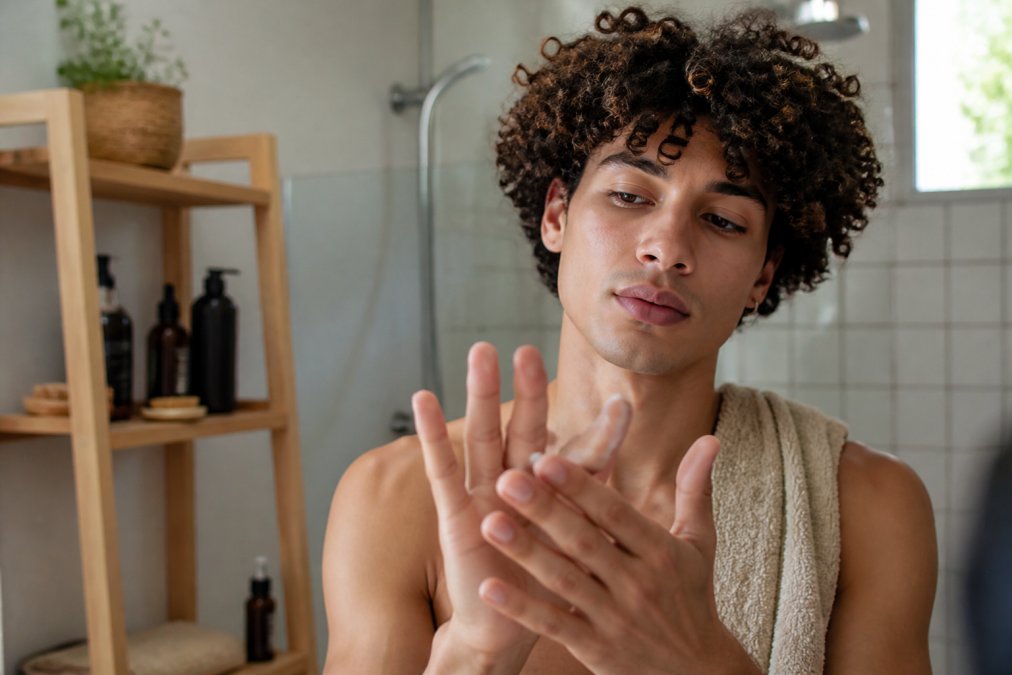
Step 1: Start on damp hair. Damp hair absorbs the formula more evenly; dry hair works for a quick refresh.
Step 2: Emulsify a small amount. Rub a pea-sized amount between your palms until it turns clear. This warms the paste so it spreads instead of clumping.
Step 3: Rake and scrunch. Rake your fingers through sections from root to tip, then scrunch upward to encourage curl definition and volume.
Step 4: Style and reshape. Twist individual curls or smooth edges as needed. The reworkable hold lets you reshape later without reapplying.
A little goes a long way, too much is the fastest route to a greasy, weighed-down finish.
Our top pick for most curly and coily hair types is the Giluxe Luxury Organic Hair Pomade, priced at $19.99. It delivers the balance most pastes miss: strong yet flexible hold, frizz control, and a non-greasy finish for daily styling.

The formula is built on botanicals including rosemary, castor oil, olive oil, jojoba oil, argan oil, coconut oil, shea butter, and vitamin E, supporting moisture retention and cuticle smoothing while providing the edge control and sculpting textured hair needs. Unlike gel, it won't leave hair stiff or flaky.
It earns its place through versatility: it works for curly, coily, wavy, straight, natural, relaxed, braided, locs, and color-treated hair, so mixed households can share one jar.
U.S. Food and Drug Administration cosmetics and ingredient safety
For a full styling routine, a lightweight organic hair oil pairs with a paste rather than replacing it. Giluxe offers botanical duo sets combining hydration with hold, each targeting a different need.
The Giluxe Hydrating Tonic & Pomade Duo ($39.99) leads with a lightweight scalp mist that refreshes dry hair and scalp, then finishes with the pomade for definition and shine, the best entry point for dryness and frizz.

The Hydrating Tonic & Pomade Duo ($42.99) pairs the same hydration with strong hold and smooth control, ideal for daily styling on all hair types.
The Hair Growth Oil & Pomade Set ($40.99) adds a scalp-nourishing oil that helps reduce the appearance of breakage, paired with the pomade for strong, flexible hold without buildup, the pick for moisture retention and healthier-looking strands.
| Set | Price | Best For |
|---|---|---|
| Hydrating Tonic & Pomade Duo | $39.99 | Dryness and frizz |
| Hydrating Tonic & Pomade Duo | $42.99 | Daily styling, all hair types |
| Hair Growth Oil & Pomade Set | $40.99 | Breakage and moisture retention |
Climate and porosity change how any curly hair paste behaves, and most guides ignore both, yet they determine whether your paste actually works on your hair.
Humidity is the biggest variable in how a paste holds. Above roughly 60% relative humidity, the cuticle absorbs moisture, swells, and lifts, turning defined curls into frizz by lunch (peer-reviewed research). A light-hold, high-oil paste loses that fight; use stronger hold with film-forming botanicals (castor oil, shea butter, a little clay) over a leave-in so the paste has something to grip.
Dry, cold air does the opposite. Below about 30% humidity, common in heated indoor air, curls lose moisture and feel brittle or straw-like. Heavy hold is the wrong instinct here; a lightweight, water-based paste with humectants (glycerin, honey derivatives, or aloe) pulls moisture toward the hair instead of sealing it out. If your paste feels waxy in January but perfect in July, this is why.
A practical seasonal rule: shift one hold level lighter in dry months and one level stronger in humid months, and adjust the amount of leave-in underneath rather than the paste itself.
Porosity, how easily your hair absorbs and releases moisture, is the second variable, and you can test it in five minutes.
High-porosity hair absorbs and loses moisture quickly, so it drinks up richer butters and oils, a paste with shea or castor will feel nourishing rather than heavy. Low-porosity hair resists absorption, so heavy products sit on top and cause buildup. If your curls feel coated no matter what, you likely have low porosity and need a lighter, water-based paste with humectants rather than occlusives.
A simple framework that works for most curl patterns:
If you're transitioning from gel to paste, do it gradually: paste on refresh days first, then full styling days as you adjust to the softer, reworkable hold.
Choosing the right curly hair paste comes down to matching hold, ingredients, and climate to your curl pattern, harder than most product labels admit. Giluxe builds its styling line around that problem, with botanical formulas designed to nourish, strengthen, and restore moisture across every texture. The Luxury Organic Hair Pomade delivers flexible hold and frizz control, while the Hydrating Tonic and Hair Growth Oil duos add lightweight moisture and scalp care. Get started with Giluxe and give your curls the definition and hydration they've been missing.

Curly hair paste adds definition, tames frizz, and provides flexible hold without the crunch of gel. It coats each curl to smooth the cuticle, lock in lightweight moisture, and keep your curl pattern intact. Unlike heavy creams, a good paste absorbs without greasy buildup, so curls stay bouncy and touchable. Giluxe Luxury Organic Hair Pomade, for example, uses botanical oils and shea butter to define curls while reducing dryness.
Apply to damp hair for maximum curl definition and even distribution. Towel-dry until hair is no longer dripping, then emulsify a dime-sized amount of paste between your palms and scrunch upward through sections. For second-day refresh, use a smaller amount on dry hair to tame flyaways and reshape curls. Applying to soaking wet hair dilutes the hold; applying to bone-dry hair can cause clumping.
It depends on the finish you want. Gel delivers a stronger cast and longer-lasting hold, which suits high-humidity days and tight coil patterns. Paste offers flexible hold, a natural finish, and reworkable styling, making it better for wavy and loose curly hair that needs movement. Many people layer a lightweight leave-in or tonic underneath paste to get definition without stiffness. The Giluxe Hydrating Tonic & Pomade Duo pairs both steps in one routine.
Match hold to curl pattern and desired longevity. Fine wavy hair (2A-2C) does best with light to medium hold so curls don't get weighed down. Medium curls (3A-3B) benefit from medium hold that defines without crunch. Tight coily hair (3C-4C) needs stronger hold plus moisture, so look for pastes with shea butter or castor oil. A reworkable formula lets you restyle throughout the day without adding more product.
Yes, when applied correctly. Paste smooths the cuticle and seals in moisture, which is the main driver of frizz. Look for water-based formulas with botanical oils like argan, jojoba, or coconut. Apply to damp hair and scrunch gently, then avoid touching curls until fully dry. A lightweight tonic misted on the scalp before paste adds extra hydration and helps control flyaways without weighing down your curl pattern.


