Your cart is empty
Tax included and shipping calculated at checkout

Drawer menu
Tax included and shipping calculated at checkout

Last Updated: August 25, 2026
Buildup occurs when product residue accumulates on hair faster than regular washing removes it. With botanical formulas, the problem stems from waxy, oil-based plant compounds. Argan oil, coconut oil, and botanical extracts coat hair beautifully initially, but without water-soluble formulation, they don't rinse cleanly. Over weeks, these residues layer and create a dull, weighed-down feeling.
Water hardness compounds the issue. Minerals in hard water (calcium and magnesium) bind to botanical oils and prevent complete rinsing. This is why the same product works well in one region but causes buildup in another, water chemistry differs. Sulfate-free shampoos are gentler but often lack the cleansing power to remove accumulated botanical residues, creating a frustrating cycle.
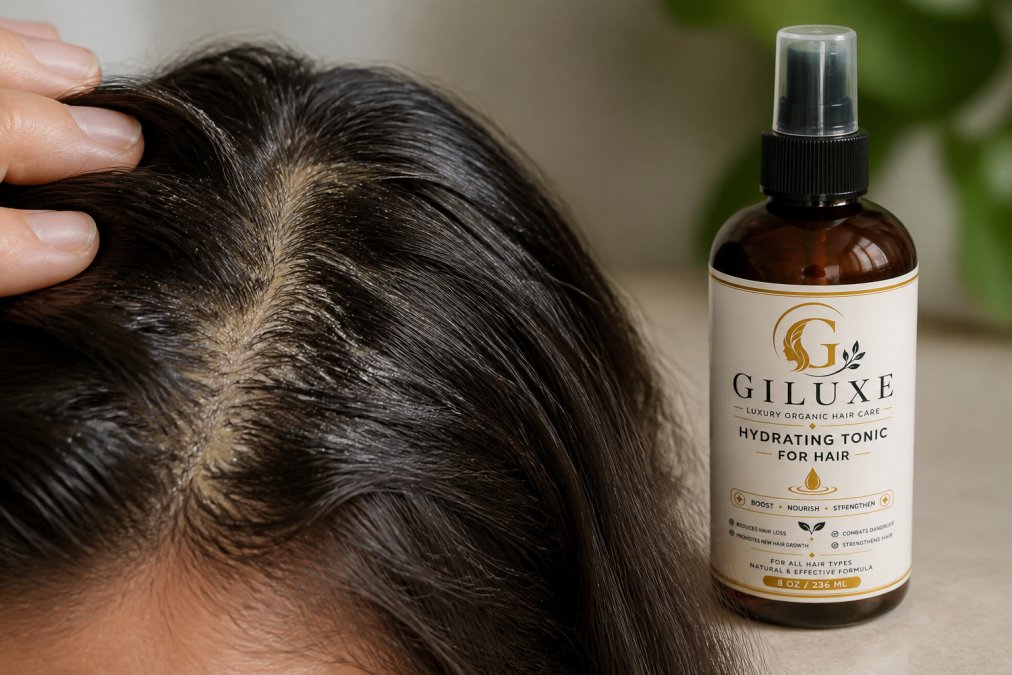
Removing existing buildup requires a clarifying approach without harsh chemicals. The goal is dissolving and rinsing accumulated residues while preserving moisture.
Clarifying rinses clear buildup between washes using acidic or mildly astringent ingredients that dissolve waxy residues and mineral deposits.
Apple Cider Vinegar Rinse: Mix one part raw, unfiltered apple cider vinegar with three parts water. After shampooing, pour through hair focusing on scalp and mid-lengths. Leave 2-3 minutes, then rinse with cool water. Use weekly until buildup clears, then monthly for maintenance.
Citrus and Herb Rinse: Steep dried rosemary, lemon peel, and chamomile in hot water for 30 minutes. Strain and cool. Use as a final rinse after shampooing for a gentler option suitable for sensitive scalps.
Sea Salt Rinse: Dissolve one tablespoon of sea salt in one cup of warm water. Apply to damp hair after shampooing, massage gently into scalp, and rinse thoroughly.
Consistency matters. Use these rinses weekly for 3-4 weeks, then transition to monthly maintenance. Most people see noticeable improvement in texture and shine within two weeks.
Hard water contains dissolved minerals, primarily calcium and magnesium, that interact with botanical oils and prevent clean rinsing. When applied to hard water, botanical oils and minerals create insoluble compounds that cling to hair shafts, building up over time into that waxy, weighed-down feeling.
Testing water hardness is simple using inexpensive test strips from hardware stores. Water hardness is measured in parts per million (ppm). Soft water (0-60 ppm) won't interfere with botanical products. Hard water (121+ ppm) will cause buildup regardless of formula lightness (usgs.gov).
If you have hard water, install a water softener, use chelating rinses to remove mineral deposits, or switch to formulas designed for hard water. Giluxe's botanical products are formulated to remain water-soluble even in moderate hard water conditions, minimizing mineral-binding issues.
Choosing the right lightweight organic hair oil depends on hair porosity, texture, and specific concerns. Not all botanical oils are equal, some penetrate the hair shaft while others sit on the surface.
For Fine and Thin Hair: Look for low molecular weight oils that absorb quickly without visible weight. Jojoba oil is closest to scalp's natural sebum and absorbs rather than coats. Argan oil works if applied sparingly to ends only. Avoid coconut oil and heavy butters.
For Coarse and Textured Hair: You need oils that penetrate deeply and provide lasting hydration. Argan oil, sweet almond oil, and avocado oil work well because they contain essential fatty acids that nourish coarse strands without visible buildup if formulas are water-soluble.
For Curly and Coily Hair: Choose oils that define curls while reducing frizz. Argan oil is safer for most curl patterns. Rose hydrosol-based tonic sprays provide hydration without oil weight.
For Dry and Damaged Hair: Seaweed collagen, argan oil, and antioxidant-rich botanical extracts help restore moisture and reduce breakage. Apply to damp hair before styling or use as overnight scalp treatment.
The best lightweight organic hair oil for 2026 emphasizes water-soluble formulation over oil type alone. Giluxe's Organic Hair Growth Oil combines argan oil with botanical extracts in a formulation designed to absorb without residue buildup.

The difference between hydrating botanical products and those creating buildup comes down to ingredient selection and formulation chemistry.
Argan Oil: High in linoleic acid and vitamin E, argan oil penetrates rather than coats (peer-reviewed research). Most people see results within 2-3 applications.
Aloe Vera: Lightweight and water-based, aloe vera hydrates without buildup. Its polysaccharides coat hair strands and reduce frizz while remaining water-soluble (peer-reviewed research).
Coconut Oil: Use sparingly. While nutrient-rich, coconut oil can solidify on cooler hair, creating visible buildup. Best applied to damp hair in small amounts or as overnight scalp treatment.
Rose Hydrosol: A byproduct of rose oil extraction, rose hydrosol is water-based and provides gentle hydration without buildup even with daily use.
Seaweed Collagen: Plant-derived and water-soluble, seaweed collagen adds slip and shine without weight while reducing breakage in textured hair.
Essential Fatty Acids: Omega-3 and omega-6 fatty acids from botanical sources like flax, chia, or hemp seed oil nourish hair without the heavy feeling of saturated fats.
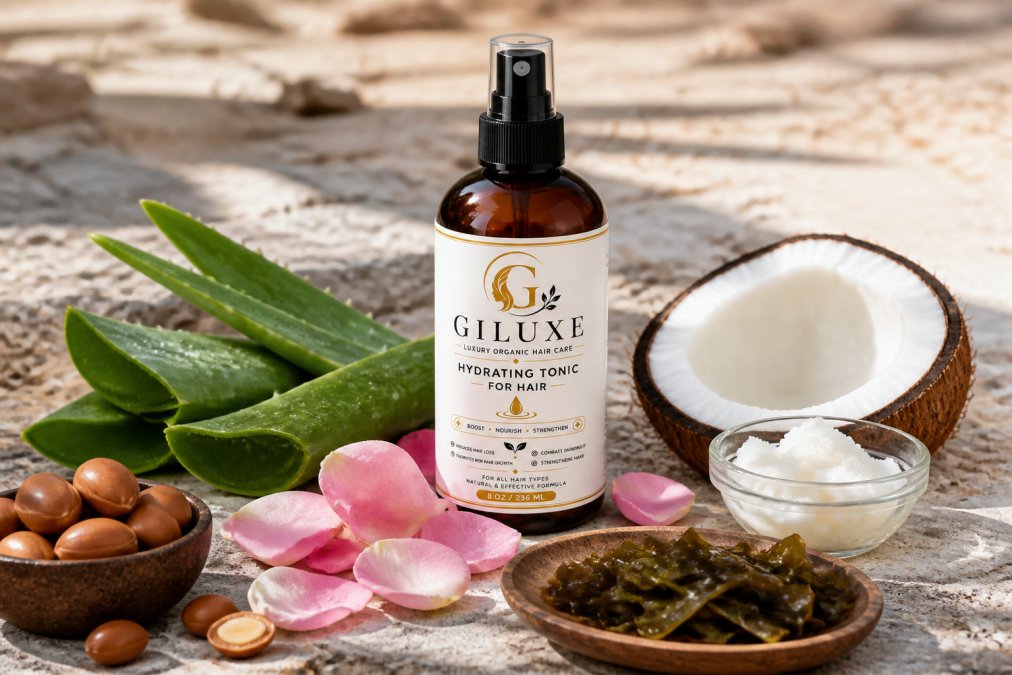
Look for these markers:
Avoid these red flags:
Giluxe's formulas prioritize transparency with every ingredient listed by botanical source and water-soluble formulation designed to prevent mineral-binding and residue issues.
Step 1: Clarify Weekly (5 minutes) Use a clarifying rinse once weekly to remove mineral deposits and product residue. Choose from DIY rinses or commercial clarifying shampoo once weekly, then sulfate-free shampoo for other washes.
Step 2: Shampoo Gently (3-5 minutes) Use sulfate-free botanical shampoo formulated to cleanse without stripping. Focus on scalp where buildup accumulates. Shampoo 2-3 times weekly for most hair types.
Step 3: Apply Lightweight Botanical Tonic (2 minutes) While hair is damp, apply lightweight tonic spray like Giluxe's Hydrating Tonic for Hair to scalp and mid-lengths. Spray directly onto scalp, massage gently, and allow to absorb.

Step 4: Use Oil Strategically (3-5 minutes) Apply small amounts of lightweight organic hair oil to damp ends only. For fine hair, use just a few drops. For coarse or textured hair, use more. Apply to damp hair for even distribution and better absorption.
Step 5: Style and Dry Use your regular styling method. Moisture from tonic and oil provides heat protection.
Step 6: Weekly Deep Treatment (10-15 minutes) Once weekly, apply lightweight botanical mask or oil treatment to damp hair, focusing on mid-lengths and ends. Leave 10-15 minutes, then rinse thoroughly with cool water.
If switching from conventional products with heavy silicones and synthetic polymers, expect a transition period of 2-4 weeks as your hair adjusts to cleaner formulas. Your scalp will regulate oil production after years of heavy buildup blocking natural signals.
Use clarifying rinses more frequently during transition, weekly or bi-weekly in the first month helps remove residual buildup from previous products. Don't abandon the routine early; give your hair at least 3 weeks to stabilize. By week 4, most people notice significantly softer, shinier hair with more volume.
Reduce product quantity as you transition. Botanical formulas are often more concentrated, so less is needed. Start with half the amount you'd normally use and stay consistent with shampooing frequency.
Mistake 1: Applying Oil to Dry Hair Oil doesn't absorb into dry hair; it sits on the surface and accumulates. Always apply botanical oils to damp hair for penetration and even distribution.
Mistake 2: Using Too Much Product Botanical formulas are concentrated. Using conventional product amounts guarantees buildup. Start with half the amount and increase only if needed.
Mistake 3: Skipping Clarifying Rinses Without regular clarifying, even lightweight botanical formulas accumulate. Weekly clarifying rinses take 5 minutes and prevent weeks of frustration.
Mistake 4: Ignoring Water Hardness Hard water prevents any botanical formula from working well. Test your water and use chelating rinses monthly or install a water softener.
Mistake 5: Mixing Heavy and Lightweight Products Using lightweight tonic but then applying heavy oil-based mask creates buildup. Keep routines consistent.
Mistake 6: Shampooing Too Infrequently Oily scalps need 2-3 washes weekly; coarse or dry hair might be fine with weekly washing. Adjust frequency to your hair type.
Botanical hair care delivers real nourishment and strength without synthetic residues. Success depends on understanding your hair's specific needs and water chemistry, then choosing formulas designed to work with those factors.
At Giluxe, we've built our botanical line around this principle: premium ingredients that absorb and deliver results without buildup. The Hydrating Tonic for Hair and Organic Hair Growth Oil work together to provide hydration while remaining completely water-soluble and residue-free. Start with a clarifying rinse, commit to the routine for 3-4 weeks, and experience why botanical hair care, done right, outperforms conventional products. Get started with Giluxe and discover hair that's genuinely stronger, shinier, and healthier.

| Step | Duration | Frequency | Best For |
|---|---|---|---|
| Clarifying rinse | 5 minutes | Weekly | All hair types |
| Gentle shampoo | 3-5 minutes | 2-3x weekly | Fine to normal hair |
| Lightweight tonic spray | 2 minutes | Daily | All hair types |
| Lightweight oil (ends only) | 3-5 minutes | Daily to 2-3x weekly | Fine to coarse hair |
| Deep botanical treatment | 10-15 minutes | Weekly | Dry or textured hair |
| Transition period | , | 2-4 weeks | New to clean formulas |
Check the ingredient list for silicone, sulfates, and heavy synthetic polymers, these are common culprits. Look for water-soluble botanical extracts, essential fatty acids, and plant-derived oils instead. Products labeled silicone-free and sulfate-free are designed to minimize residue. If you're unsure, start with a lightweight formula and monitor your scalp and hair texture after one week of use.
Yes, they can, but it depends on your hair porosity and how much you use. Argan oil and coconut oil are nourishing, but they're occlusive and can accumulate on fine or low-porosity hair. For buildup-prone hair, use lighter botanical oils in smaller amounts, or choose water-soluble botanical extracts instead. High-porosity hair typically absorbs these oils without residue.
Lightweight botanical oils with high absorption rates work best for fine hair. Look for oils with lower molecular weights, such as jojoba, rosehip, or seaweed collagen-infused formulas. The Giluxe Hydrating Tonic for Hair ($21.99) is designed to hydrate without weight, while the Organic Hair Growth Oil ($24.99) uses a lightweight botanical blend formulated to nourish without heaviness. Apply sparingly to the scalp rather than the full length of fine hair.
Most people benefit from clarifying once every 2-4 weeks, depending on water hardness and product density. If you use heavy botanical oils or live in a hard-water area, clarify weekly. DIY clarifying rinses using apple cider vinegar or lemon juice are effective and gentle. Monitor your scalp for excess sebum and hair for dullness, these are signs it's time to clarify.
[EXTERNAL_LINK: FDA guidance on cosmetic ingredient safety | fda.gov]
[EXTERNAL_LINK: Environmental Working Group's Skin Deep cosmetics database | ewg.org]
[EXTERNAL_LINK: Journal of Cosmetic Dermatology research on botanical hair care formulations | wiley.com]
This article was written using GrandRanker


