Your cart is empty
Tax included and shipping calculated at checkout

Drawer menu
Tax included and shipping calculated at checkout

Last Updated: September 9, 2026
An itchy scalp is one of the most common yet frustrating hair concerns, often disrupting sleep and confidence alike. This guide from Giluxe walks through the root causes of scalp pruritus and offers botanical, practical solutions you can mix at home. Natural remedies for itchy scalp relief work best when they address the underlying trigger, whether that is dryness, excess sebum, or a sensitivity to synthetic fragrances.
Most commercial anti-itch products rely on harsh chemicals that strip the scalp barrier, creating a cycle of rebound dryness. The natural approach is gentler: it restores moisture, calms inflammation, and supports the scalp microbiome without disrupting its delicate pH balance.
Understanding the cause is the first step toward lasting itchy scalp relief. The most frequent culprits are seborrheic dermatitis, dandruff, dry scalp, and allergic contact dermatitis triggered by hair products. Seborrheic dermatitis and dandruff both involve an overgrowth of the malassezia yeast, which feeds on natural oils and produces irritating byproducts. Dry scalp, by contrast, results from transepidermal water loss that leaves the skin tight, flaky, and prone to micro-cracks.
A quick differentiation test helps: dandruff flakes tend to be larger, yellowish, and oily, while dry scalp produces smaller, white, powdery flakes. Scalp psoriasis and folliculitis are less common but cause distinct symptoms like silvery plaques or painful bumps. If your itching accompanies visible sores, hair loss, or spreads beyond the scalp, professional evaluation is warranted.
Treating a dry, itchy scalp naturally requires a methodical routine rather than a single miracle product. The goal is to restore the scalp barrier and reduce inflammation without disrupting the natural sebum production that keeps hair moisturized.
Before applying anything, assess whether your scalp is oily, dry, or combination. Oily scalps benefit from lighter, astringent ingredients, while dry scalps crave heavier emollients. A simple observation: if your hair looks greasy by day two, your scalp leans oily; if it feels tight and shows flakes year-round, it is dry.
Select a carrier oil or base that matches your scalp's needs. Jojoba oil closely mimics human sebum and suits most types, while coconut oil penetrates deeply for dry scalps. For oily scalps, a lighter aloe vera gel base prevents buildup while still delivering soothing hydration.
Essential oils for scalp health are potent allies, but only when used correctly. Tea tree oil is the most studied for its antifungal properties against malassezia, while peppermint oil provides a cooling sensation that distracts from itch signals. Lemongrass oil has shown promise in managing dandruff symptoms in clinical settings, though results take several weeks of consistent use.
The critical rule is dilution. Essential oils are concentrated and can cause chemical burns or allergic reactions when applied undiluted. Always mix them into a carrier oil at a concentration of 2-3%, meaning roughly 3 drops of essential oil per tablespoon of carrier. This protects the scalp barrier while still delivering active botanical benefits.
These five home treatments form the core of any natural itchy scalp relief routine. Each targets a different mechanism, from reducing inflammation to rebalancing the scalp microbiome.
Colloidal oatmeal is a scientifically recognized skin protectant; the U.S. Food and Drug Administration (FDA) monographs it for temporary relief of itching. Its efficacy comes from avenanthramides, polyphenolic compounds that exhibit anti-inflammatory and anti-itch properties by inhibiting the release of cytokines and histamines from skin cells.
How to Use: Mix 1/2 cup of colloidal oatmeal (look for brands that specify 'colloidal' on the label) with warm water to form a thick paste. Apply directly to your scalp, parting your hair in sections. Leave it on for 15 to 20 minutes, then rinse thoroughly with lukewarm water and follow with a gentle, sulfate-free shampoo.
Best For: This remedy is ideal for calming active flare-ups from contact dermatitis, sunburn, or general dryness. It is the gentlest option on this list and is safe for all hair types, including chemically treated or color-treated hair. It provides immediate relief by physically coating the scalp and reducing inflammation without stripping natural oils.
Pure aloe vera gel is a multi-functional remedy. Its primary benefits come from its high water content (over 98%) and its polysaccharides, which help retain moisture in the skin. It also contains enzymes like bradykinase, which help reduce inflammation when applied topically. For an itchy scalp, aloe provides a cooling, hydrating effect that soothes irritation and helps repair a compromised skin barrier.
How to Use: Use 100% pure aloe vera gel. If extracting from a leaf, scoop out the clear inner gel, avoiding the yellow latex layer (aloin). Apply 2-3 tablespoons directly to your scalp, massaging gently for two minutes. Leave it on for 20 to 30 minutes, then rinse with cool water. Aloe can be left on overnight for deeper hydration, but protect your pillowcase with a towel. Use this remedy 2-3 times per week.
Best For: This is the go-to remedy for a scalp that feels hot, sun-exposed, or irritated from heat styling. It is lightweight and non-comedogenic, making it suitable for oily scalps that need hydration without heavy oils.
This combination targets both microbial causes and dryness. Coconut oil is rich in lauric acid, a medium-chain fatty acid with demonstrated antimicrobial properties. It penetrates the hair shaft better than mineral oil, reducing protein loss and improving hair strength. Tea tree oil (Melaleuca alternifolia) is one of the most well-researched essential oils for scalp health; a 2002 study in the Journal of the American Academy of Dermatology found that a 5% tea tree oil shampoo significantly reduced dandruff severity by 41% after four weeks of use (PubMed).
How to Use: Combine two tablespoons of virgin coconut oil with 3-4 drops of high-quality tea tree oil (roughly a 2% dilution). Massage the blend into your scalp for 5 minutes, focusing on areas of buildup or flaking. Leave it on for 30 minutes to an hour, then shampoo twice with a gentle cleanser to ensure all oil is removed. Use this treatment once weekly.
Best For: This is most effective for seborrheic dermatitis and dandruff where malassezia yeast overgrowth is the suspected culprit. It is also deeply moisturizing for dry, brittle hair. Avoid this blend if you have a known allergy to tree nuts or coconuts.
Apple cider vinegar (ACV) works by helping to restore the scalp's natural acidic pH (typically 4.5-5.5). Many shampoos and hard water can leave the scalp more alkaline, which can disrupt the skin barrier and promote the growth of malassezia. An ACV rinse helps re-acidify the scalp, creating an environment less hospitable to fungal overgrowth and helping to smooth the hair cuticle.
How to Use: Always dilute raw, unfiltered ACV (with the 'mother') with water, a safe starting ratio is 1 part ACV to 4 parts water for sensitive scalps, or 1:3 for more resilient ones. After shampooing, pour the mixture over your scalp, avoiding your eyes. Massage briefly and leave it on for no more than 2 minutes, then rinse thoroughly with cool water. Limit this rinse to once per week.
Best For: This is best for an itchy scalp accompanied by visible buildup, product residue, or a tendency toward seborrheic dermatitis. It is not recommended for those with open sores, severe inflammation, or highly porous, damaged hair, as it can cause stinging and further dryness.
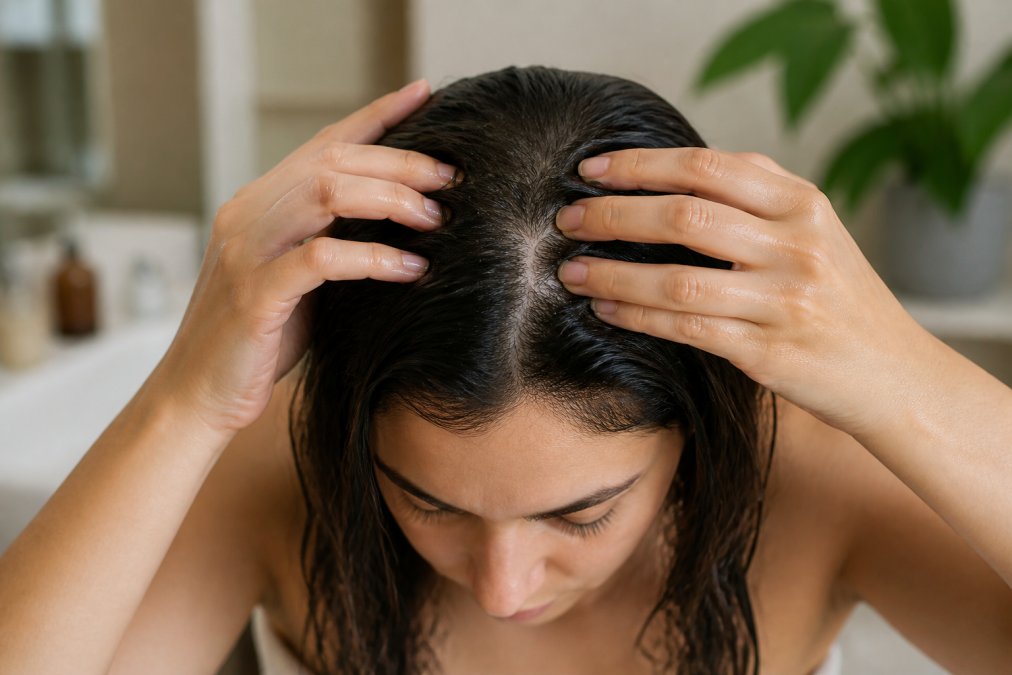
A daily scalp massage is a drug-free method to relieve tension-related itching and improve circulation. Increased blood flow to the scalp can help deliver nutrients to hair follicles and may promote healthier hair growth. The mechanical action of massage also helps to manually loosen and remove dead skin cells and product buildup.
How to Use: Choose a lightweight botanical oil that won't clog pores or weigh down hair, jojoba oil is an excellent choice because its molecular structure closely mimics human sebum. Warm about a teaspoon between your palms. Using your fingertips, make small, firm circular motions across your entire scalp, focusing on the hairline, crown, and nape of the neck. Massage for 5-10 minutes daily, ideally before showering.
Best For: This is a preventative and maintenance technique for anyone experiencing stress-related itching or general scalp tension. It is also beneficial for those with dry scalps who need consistent, light moisture without the heaviness of a deep conditioning oil treatment.
Patch testing is the single most important safety step in natural itchy scalp relief, yet most guides omit it. Before applying any new remedy to your scalp, test it on a small area of skin behind your ear or on your inner forearm. Apply a small amount, cover it with a bandage, and wait 24 to 48 hours to check for redness, swelling, or burning.

This protocol matters because the scalp skin is thinner than most body skin and absorbs ingredients rapidly. An adverse reaction on the scalp can cause swelling, blistering, and temporary hair loss. Store any mixed remedies in a sealed glass jar in the refrigerator and discard after one week, since natural ingredients lack preservatives and can harbor bacteria.
Hair type determines how remedies should be applied and rinsed. Fine hair weighs down easily, so oil-based treatments should concentrate on the scalp only and be followed by a clarifying shampoo. Coily and textured hair, which tends toward dryness, benefits from leaving botanical oils on longer to maximize absorption and reduce breakage.
For those with tightly coiled hair, the American Academy of Dermatology's guidance on hair care emphasizes that moisture retention is the priority, meaning heavier oils like castor or shea butter blends work better than lightweight mists. Individuals with wavy or straight hair should focus on scalp-only application to avoid greasy lengths. Adjusting frequency matters too: oily scalps need treatments twice weekly, while dry, textured scalps may need daily light moisture.
Natural remedies have limits, and persistent itching signals when to seek professional care. If your scalp remains itchy after four to six weeks of consistent natural treatment, or if you notice bleeding, oozing, significant hair thinning, or patches of scaly skin, consult a board-certified dermatologist. These symptoms may indicate scalp psoriasis, severe seborrheic dermatitis, or a fungal infection requiring prescription treatment.
A critical safety consideration most natural remedy guides overlook is how home treatments interact with prescription or over-the-counter (OTC) medicated shampoos. If you are using a medicated shampoo containing ketoconazole (e.g., Nizoral), coal tar (e.g., Neutrogena T/Gel), or selenium sulfide (e.g., Selsun Blue), you need a specific protocol to avoid reducing their effectiveness or causing unintended irritation.
The core problem: Many natural oils, particularly coconut oil and jojoba oil, create a physical barrier on the scalp. If applied immediately before or after a medicated shampoo, this barrier can prevent the active medication from penetrating the skin. Dermatologists routinely advise patients to avoid heavy conditioners or oils before applying topical treatments.
A practical protocol for combining approaches:
Beyond the four-to-six-week rule, specific red flags demand immediate professional evaluation:
The National Eczema Association's resource library offers a useful overview of when scalp symptoms warrant medical evaluation. A board-certified dermatologist can perform a scalp biopsy or KOH test to definitively diagnose the cause of your itching, which is the only way to ensure you are treating the correct underlying condition.
Natural itchy scalp relief is achievable when you match the remedy to the cause, respect dilution ratios, and protect your scalp barrier with patch testing. Start with the gentlest option, a colloidal oatmeal mask or aloe vera gel, and escalate to essential oil blends only if needed. Consistency over several weeks matters more than intensity in a single session.
At Giluxe, we design botanical hair care for every hair type, from fine to coily, with formulas that hydrate without heavy buildup. Our Hydrating Tonic for Hair offers a lightweight daily mist that refreshes the scalp and improves manageability, while the Organic Hair Growth Oil supports scalp nourishment and stronger-looking strands. For a complete routine, the Hydrating Tonic and Hair Growth Oil Duo pairs both for daily maintenance.

For immediate itchy scalp relief, apply a cool compress to calm inflammation, then massage a few drops of diluted tea tree oil or aloe vera gel directly onto the irritated area. Avoid hot water and harsh shampoos, which strip natural oils and worsen itching. A gentle scalp massage with a lightweight botanical oil like the Giluxe Organic Hair Growth Oil can also soothe dryness on contact. If itching persists after a week of home treatment, see a dermatologist to rule out conditions like seborrheic dermatitis or scalp psoriasis.
Low levels of vitamin D, vitamin B12, iron, and zinc have been linked to scalp itching and irritation. Vitamin D plays a role in skin cell turnover, and a deficiency can worsen conditions like psoriasis and eczema on the scalp. Rather than self-diagnosing, ask your doctor for a blood panel if you suspect a deficiency. In the meantime, focus on how to treat dry scalp naturally with moisturizing ingredients like jojoba oil and colloidal oatmeal, which support the scalp barrier regardless of your vitamin levels.
Yes, certain natural oils have anti-inflammatory properties that calm an irritated scalp. Coconut oil contains lauric acid, which soothes dryness and reduces transepidermal water loss. Jojoba oil closely mimics human sebum, helping restore pH balance without clogging pores. For essential oils for scalp health, tea tree oil is the most studied for its antibacterial and antifungal properties, particularly against malassezia, the yeast linked to dandruff. Always dilute essential oils in a carrier oil and patch test first to avoid allergic contact dermatitis.
See a dermatologist if your scalp itching lasts more than two weeks despite consistent home treatment, or if you notice severe flaking, bleeding, oozing, hair loss, or patches of thick scaly skin. These symptoms can signal scalp psoriasis, folliculitis, or a fungal infection that needs prescription treatment. Also seek medical advice if natural remedies for itchy scalp relief cause burning or worsen your symptoms, which may indicate an allergy to an ingredient. Sudden, unbearable itching with no visible cause also warrants professional evaluation.
The path to a calm, healthy scalp rarely happens overnight, and the trial-and-error of natural remedies can feel endless. Giluxe simplifies the process with premium, botanical-infused formulas that restore moisture and nourish the scalp across all hair types. Get started with Giluxe and transform your daily hair care into a ritual of genuine scalp health.


