Your cart is empty
Tax included and shipping calculated at checkout

Drawer menu
Tax included and shipping calculated at checkout

Last Updated: September 11, 2026
Curls lose moisture faster than straight hair, so the best organic leave-in conditioner for curls must hold water in, not just coat the strand. Conventional leave-ins rely on silicones that seal the cuticle with a glossy film; organic formulas use botanical extracts, humectants, and emollients that work with the hair's structure.
Most guides treat "organic" as a marketing label rather than a functional choice. A botanical leave-in behaves differently on wavy, curly, and coily hair because it doesn't create the same plastic-like coating, which matters for moisture retention, frizz control, and curl definition by day three.
This guide from Giluxe breaks down how porosity, climate, and curl pattern interact with organic formulas, plus where a lightweight organic hair oil fits into the routine.

The best organic leave-in conditioner for curls depends on your porosity and how much hold you want. Here's how Giluxe's botanical lineup maps to common curl needs.
| Product | Price | Best For | Key Benefit |
|---|---|---|---|
| Giluxe Hydrating Tonic for Hair | $21.99 | Daily refresh, 2A-4A curls | Lightweight mist, no buildup |
| Giluxe Luxury Organic Hair Pomade | $19.99 | Definition and edge control | Strong flexible hold, frizz control |
| Giluxe Organic Hair Growth Oil | $24.99 | Scalp-focused routine | Nourishes roots, reduces breakage look |
| Hydrating Tonic & Pomade Duo | $42.99 | Complete styling set | Hydration plus hold in one pair |
Each product serves a distinct role: the tonic hydrates, the pomade defines, and the oil nourishes the scalp.

Choosing the right organic leave-in conditioner comes down to two variables: hair porosity and the ingredient list. Each botanical oil behaves differently depending on how open your cuticle is.
Hair porosity is how easily your hair absorbs and retains moisture, determined by how tightly the cuticle layers sit. Low-porosity hair resists absorption and needs lightweight, water-based mists. High-porosity hair absorbs quickly but loses moisture just as fast, so it needs richer emollients like shea butter and coconut oil.
A common mistake is buying the heaviest product to fix dryness. On low-porosity curls, heavy butters and oils sit on top, creating buildup without hydration. Match product weight to how your hair absorbs.
A quick at-home check: drop a clean strand of shed hair into room-temperature water. If it floats for several minutes, you're likely low porosity; if it sinks within a minute or two, high porosity; if it hovers, normal.
Most guides list oils without explaining what each does at the cuticle. Here's the breakdown.
Jojoba oil is a liquid wax ester whose structure resembles human sebum, letting it slip between cuticle scales on low-porosity hair without sitting on top. It won't flatten fine 2A-3A waves.
Argan oil is rich in oleic and linoleic fatty acids and relatively lightweight. On normal-to-high porosity hair it penetrates the outer cuticle and smooths raised scales; on low-porosity hair it sits on the surface, so it works better as a finishing shine agent.
Coconut oil has a small molecular size and straight-chain triglyceride structure that penetrates the cortex more readily than most plant oils, useful for high-porosity hair that loses moisture from the inside out (PubMed). On low-porosity hair, it can cause a stiff, crunchy feel.
Castor oil is thick and viscous, high in ricinoleic acid, a sealant, not a penetrator. On coily 4B-4C hair it holds moisture in and adds defining weight; on fine wavy hair it's too heavy and causes limpness.
Shea butter is a solid fat at room temperature, high in stearic and oleic acids. Its occlusive layer slows water loss, ideal for high-porosity 4A-4C hair in dry conditions, problematic for low-porosity hair.
Rosemary and tea tree oils are not emollients. They're included for scalp support, rosemary has a long folk history in hair care, and tea tree is common for scalp flaking. They belong in a scalp-focused step, not as your primary moisture source.
Look for humectants that pull water into the strand, such as aloe vera and glycerin. Emollients like jojoba, argan, and shea butter soften and add slip for detangling. Essential fatty acids from avocado and olive oil support elasticity and strength.
Avoid sulfates, parabens, and silicones if you're building a clean routine. Silicones create temporary shine but block moisture from entering the cuticle, leading to dryness over time; non-toxic formulas use botanical extracts that support the cuticle rather than coating it.
A lightweight organic hair oil belongs at the end of your routine, not the beginning. Applied to damp hair after your leave-in, it seals in hydration and adds shine without weighing curls down.
The Giluxe Organic Hair Growth Oil at $24.99 is built for this step. Its blend of rosemary, castor, jojoba, argan, and coconut oils absorbs quickly into scalp and strand, nourishing without the heavy buildup that turns curls limp. Tea tree oil rounds out the formula for scalp health.

Where most people go wrong is using oil as a substitute for water-based hydration. Oil seals moisture in; it doesn't add moisture. If hair feels dry after oiling, you skipped hydration. Apply the tonic or leave-in first, then seal with oil.
For coily and tight textures, this layering approach matters more than the specific brand. Fine wavy hair can often skip oil entirely and rely on a light mist alone.
Giluxe's curl lineup centers on three products that each solve a different part of the routine.
Giluxe Hydrating Tonic for Hair ($21.99) is the entry point. This lightweight botanical mist delivers instant hydration to dry hair and scalp, improves manageability, and reduces frizz without residue. Formulated with rosemary, ginger, cinnamon, clove, and avocado seed, it's best for daily refresh on wavy through coily hair and gentle enough for color-treated or braided styles.
Giluxe Luxury Organic Hair Pomade ($19.99) handles definition. Built with rosemary, castor oil, olive oil, jojoba, argan, coconut oil, shea butter, and vitamin E, it provides strong yet flexible hold without stiffness or flaking, ideal for edge control and taming frizz on 4C hair.
Giluxe Organic Hair Growth Oil ($24.99) is the scalp treatment. It nourishes roots, helps reduce the appearance of breakage, and adds natural shine. Use it two to three times weekly as a scalp massage before styling.
If you'd rather buy the routine in one go, the Hydrating Tonic & Pomade Duo at $42.99 bundles hydration and styling, while the Hair Growth Oil & Pomade Set at $40.99 pairs scalp care with definition.
An organic hair care routine for curly hair works best when you layer products from lightest to heaviest.
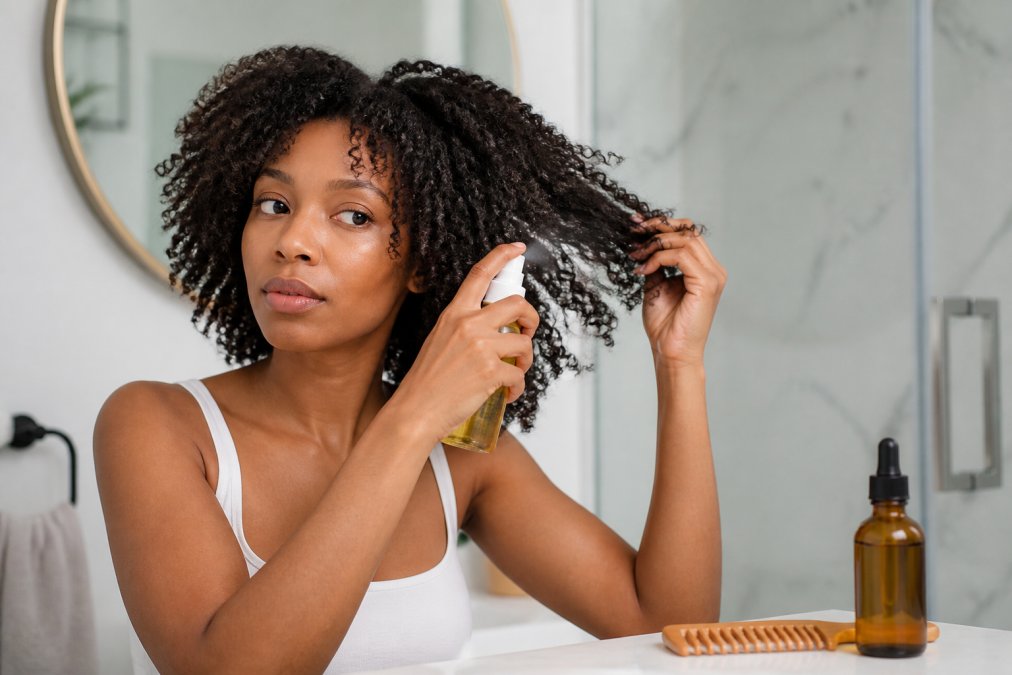
Consistency matters more than product count. A three-product routine used daily outperforms a ten-product routine used occasionally.
Most curl guides ignore two variables that change everything: climate and scalp condition. Both are where standard advice breaks down.
Humectants like glycerin and aloe vera are bidirectional, they move water toward whichever side of the cuticle has more of it.
In low humidity (below roughly 40% relative humidity, common in deserts, high altitudes, and heated winter air), the air holds little water (weather.gov). A glycerin-rich leave-in pulls moisture from deeper in the hair shaft toward the drier air, leaving hair progressively drier. Lean on emollient- and occlusive-rich formulas, shea, castor, jojoba, and either skip glycerin or apply it only to soaking-wet hair so there's enough surface water to feed the humectant.
In high humidity (above roughly 65% relative humidity, typical of the Southeast and coastal summers), the same glycerin pulls water from the air into your hair. The strand swells, the cuticle lifts, and frizz appears within minutes outside, which is why a leave-in that works in Phoenix can fail in Miami. In humid climates, choose formulas where glycerin appears lower in the ingredient list, and rely on film-forming botanicals and emollients that slow water uptake.
A practical rule: if hair gets frizzier the longer you're outside, your humectant load is too high for your climate. If it gets drier and rougher, your humectant load is too low or your sealant step is missing.
Scalp health is the other blind spot, and it matters most for anyone buying "organic" products specifically. The scalp is skin, it has its own barrier, oil production, and microorganisms that regulate flaking and irritation. Curly and coily hair holds more product and oil at the root because shed skin cells and sebum can't travel down the strand as easily as on straight hair. That buildup feeds the same yeast species associated with dandruff and seborrheic dermatitis, which is why so many people with tight textures deal with itching and flaking even when using "clean" products (peer-reviewed research).
A few concrete practices help:
Hair porosity also shifts with damage. Heat styling, coloring, and chemical relaxers raise porosity, so your product needs change over time: a formula that worked on virgin hair may feel too light after a color service, or a heavy butter that was fine before a keratin treatment may now sit on the surface. Reassess every few months rather than sticking to one formula.
Finding the best organic leave-in conditioner for curls comes down to matching formula weight to your porosity, layering from lightest to heaviest, and treating your scalp as part of the routine. Most curl frustration traces back to one of those three steps, not a missing product.
Giluxe builds its curl lineup around that principle: the Hydrating Tonic delivers weightless hydration, the Organic Hair Growth Oil nourishes the scalp and seals in moisture, and the Luxury Organic Hair Pomade defines curls with flexible hold that never feels stiff, covering hydration, scalp care, and styling without the buildup that flattens curls.
Get started with Giluxe and build a botanical routine that restores moisture from root to tip.
A good organic leave-in conditioner for curls is lightweight, botanical-based, and free from sulfates, parabens, and silicones. Look for humectants like aloe vera, emollients like shea butter, and essential fatty acids from oils such as coconut or argan. Formulas that absorb quickly without leaving buildup work best for wavy, coily, and 4C hair types, since they hydrate the cuticle and support curl definition without weighing down the strand.
Conventional leave-ins often rely on silicones to create instant slip and shine, which can coat the hair cuticle and cause product buildup over time. Organic formulas use botanical extracts, natural oils, and humectants instead. They may feel lighter at first, but they support moisture retention and hair elasticity more gradually. For curly and coily hair, silicone-free and paraben-free options reduce the risk of dullness and keep the scalp healthier.
Prioritize humectants like aloe vera and glycerin to draw in hydration, emollients like shea butter and coconut oil to seal moisture, and essential fatty acids from avocado or argan oil to strengthen strands. Rosemary, ginger, and tea tree oil support scalp health. Avoid sulfates, parabens, silicones, and drying alcohols. Matching these ingredients to your hair porosity helps ensure the product absorbs rather than sits on top of your curls.
Yes. Botanical leave-in conditioners smooth the hair cuticle, which reduces frizz and helps curl clumps form cleanly. Humectants pull moisture into the strand, while emollients seal it in, so curls stay defined longer. For best results, apply to damp hair and scrunch upward. A lightweight organic hair oil layered over the leave-in can add shine and extend definition without the crunch or greasy feel that heavier products leave behind.
Most curly and coily hair types benefit from leave-in conditioner after every wash, which is typically one to two times per week. If your hair feels dry between washes, a hydrating tonic or lightweight oil can refresh moisture without a full wash. Over-application can lead to product buildup, so start with a small amount and adjust based on your hair porosity, climate, and how quickly your curls absorb the formula.


