Your cart is empty
Tax included and shipping calculated at checkout

Drawer menu
Tax included and shipping calculated at checkout

Last Updated: September 5, 2026
Dry skin happens when the epidermis loses water faster than it can replace it, a process known as transepidermal water loss that compromises the lipid barrier and causes tight, flaky, itchy sensations. Most people respond with a heavy moisturizer, but that only treats the symptom. The real fix requires understanding whether your skin needs water pulled in or a seal to keep water from escaping.
At Giluxe, a common mistake is treating all dryness the same way. A cream that works in humid summer months will fail you in a dry, heated home during winter. The solution starts with your routine, not your product shelf.
Skin hydration is a balance between water and oil content in the stratum corneum, the skin's topmost layer. When that balance tips, the barrier cracks. You can restore it with ingredients you likely already have in your kitchen.
The most important concept in natural skincare is the difference between humectants and occlusives. A humectant draws water into the skin from the environment or deeper dermal layers. An occlusive is a fatty substance that sits on the skin and physically blocks water from evaporating.
Honey, aloe vera, and glycerin are classic humectants that work beautifully on damp skin. If you apply a humectant to dry skin and skip the occlusive step, the water you pulled in will evaporate within the hour.
| Ingredient Type | Examples | Primary Action | Best Applied To |
|---|---|---|---|
| Humectant | Honey, aloe vera, glycerin | Pulls water into the epidermis | Damp skin immediately after washing |
| Occlusive | Shea butter, jojoba oil, squalane | Seals water in, prevents evaporation | Over a humectant or on damp skin |
| Emollient | Coconut oil, avocado oil | Softens and smooths dry patches | Any time, but best after exfoliation |
You need both: a humectant without an occlusive is a leaky bucket, and an occlusive without a humectant just sits on dead, dehydrated cells. This distinction explains why a single-ingredient approach often fails.
The goal is to maximize water retention while minimizing further damage to the lipid barrier. Each step builds on the last.
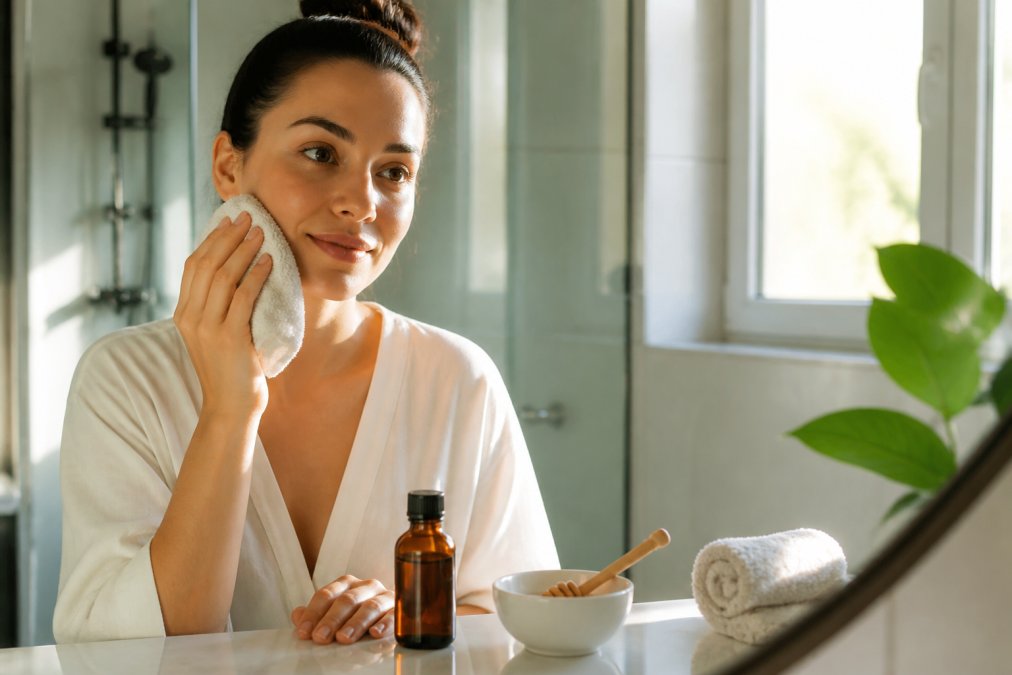
Hot water strips natural oils faster than any cleanser, literally melting away the fatty acids and ceramides in the lipid barrier (the American Academy of Dermatology). Switch to lukewarm water, limit your shower to ten minutes, and pat your skin dry rather than rubbing. Leaving skin slightly damp is essential because that residual water is what the next steps will lock in.
Within three minutes of stepping out, while skin is still damp, apply your humectant. Raw honey is a natural humectant with soothing properties; aloe vera gel is excellent for irritated or sun-exposed skin. Massage a thin layer gently, focusing on dry patches.
While your skin is still tacky from the humectant, apply a thin layer of an occlusive oil or butter to trap water in the epidermis and support barrier repair overnight. For sensitive skin, use squalane or jojoba oil, which mimic your skin's own sebum. For extremely dry areas like elbows and heels, shea butter provides a thicker seal.
The best natural oils for dry skin depend on your skin type, the season, and the time of day. Key differentiators are fatty acid profile, comedogenic rating (how likely it is to clog pores), and absorption speed.
Coconut oil is rich in lauric acid, giving it a strong occlusive effect ideal for rough patches on the body. However, its comedogenic rating of 4 out of 5 means it is highly likely to clog facial pores, so reserve it for below the neck if you are prone to breakouts.
Shea butter contains stearic and oleic acids plus vitamins A and E. It is non-comedogenic (rating of 0) and provides a thick seal ideal for overnight repair or very dry, cracked hands and feet. It also contains cinnamic acid, which provides mild anti-inflammatory benefits.
Argan oil, which Giluxe uses in several formulas, offers a balanced middle ground. Its roughly 1:1 ratio of oleic to linoleic acid mirrors the skin's own sebum. It absorbs within five to ten minutes, leaves minimal residue, and has a comedogenic rating of 1, making it a safe daily option for most skin types.
Avocado oil is a mid-weight option with phytosterols and lecithin that help repair the lipid barrier. Heavier than argan but lighter than coconut, it is effective on damp skin after a shower. Its comedogenic rating of 2 makes it suitable for most skin types but potentially problematic for active acne.
Jojoba oil is technically a liquid wax ester whose structure is nearly identical to human sebum, allowing quick penetration without a greasy film. It is non-comedogenic and works well as a daytime moisturizer under makeup. Because it is lighter, it provides less occlusive protection, so apply it over a humectant like aloe vera or glycerin.
Squalane (derived from sugarcane or olives) is a highly stable, non-oxidizing saturated hydrocarbon. It is the lightest option with a dry, silky finish, ideal for sensitive or rosacea-prone skin. Its downside is minimal occlusive protection on its own, so layer it under a heavier butter at night.
If your skin feels tight within an hour of cleansing, you likely need a heavier occlusive like shea butter or coconut oil. If it feels greasy by midday but still flakes, a balanced oil like argan or avocado is a better fit. If your skin is reactive or prone to milia, stick with squalane or jojoba.
A common mistake is applying oil to bone-dry skin. Oil is an occlusive, not a humectant: it seals moisture in but does not add water. Always apply oils over a damp base or a water-based product. If you are coming from heavy commercial creams, expect a one-to-two-week transition period where you may need a thin layer of shea butter over your oil at night.
For a quick reference, here is how the oils stack up against each other:
| Oil | Primary Fatty Acids | Comedogenic Rating | Best Use Case | Absorption Speed |
|---|---|---|---|---|
| Coconut Oil | Lauric acid (saturated) | 4/5 | Body, nighttime seal | Slow |
| Shea Butter | Stearic, oleic acids | 0/5 | Hands, feet, overnight | Very Slow |
| Argan Oil | Oleic, linoleic acids | 1/5 | Daily face, all skin types | Medium |
| Avocado Oil | Oleic, palmitic acids | 2/5 | Post-shower body | Medium-Slow |
| Jojoba Oil | Wax esters (gadoleic) | 0-2/5 | Daytime face, under makeup | Fast |
| Squalane | Saturated hydrocarbon | 0-1/5 | Sensitive skin, daytime | Very Fast |
Topical application only addresses half of the hydration equation. Foods that hydrate skin from within supply the raw materials to build a healthy lipid barrier. The skin barrier is built from the inside out over a 14- to 28-day cycle, meaning today's diet directly influences the barrier you will have next month.
Water-rich foods like cucumber, watermelon, and celery provide a direct hydration boost, but their real value lies in electrolytes and micronutrients. Cucumber contains silica for collagen support; watermelon is rich in lycopene, which protects against UV-induced oxidative stress; celery provides a balanced sodium-potassium ratio that helps your body retain water.
Aim for at least two servings of water-rich produce per day. One serving is roughly one cup of sliced cucumber, one cup of watermelon cubes, or two stalks of celery, contributing approximately 90 to 120 milliliters of water per serving.
Foods high in omega-3s, such as walnuts, flaxseed, and fatty fish, support the lipid barrier by reducing inflammation and improving cellular water retention. Omega-3s are incorporated into skin cell membranes, making them less prone to transepidermal water loss. Omega-6s, found in vegetable oils, compete for the same enzymes and can promote inflammation. The typical American diet has an omega-6 to omega-3 ratio of roughly 15:1; a skin-supportive ratio is closer to 4:1 or lower.
To shift this ratio, aim for the following weekly targets:
Antioxidants from berries and leafy greens protect the skin from oxidative stress that accelerates transepidermal water loss. When UV light or pollution generates free radicals, they attack stratum corneum lipids, creating microscopic gaps through which water escapes. Vitamin C, vitamin E, and polyphenols neutralize these free radicals before they damage the barrier.
Build a "color plate" at each meal: one dark leafy green, one deeply colored fruit, and one orange or yellow vegetable. This provides broad-spectrum antioxidant protection that no single supplement can replicate.
The synergy matters more than any single superfood. Drinking eight glasses of water while eating processed foods will not fix dry skin, because inflammation impairs the skin's ability to hold water. Conversely, a nutrient-dense diet cannot compensate for a harsh shower routine. Internal and external care must work together.
Caffeine and alcohol are mild diuretics. Moderate consumption does not meaningfully dehydrate the skin, but excessive intake can counteract your hydration efforts. If you drink caffeinated beverages, pair each cup with an equal amount of water.
Dermatologist-recommended approaches to dry skin relief have shifted in recent years toward barrier repair rather than heavy moisturizing. The medical consensus, reflected in guidance from the American Academy of Dermatology Association, emphasizes gentle cleansing, lukewarm water, and immediate moisturizing after washing. Many dermatologists now recommend ointments and creams over lotions because they contain a higher oil-to-water ratio.
What most DIY guides get wrong is exfoliation. Gentle exfoliation removes dead cells that prevent moisturizer penetration, but aggressive scrubbing damages the barrier. Limit physical exfoliation to once a week, and never exfoliate cracked or inflamed skin. A mild lactic acid product can help, but never combine it with active irritation.
Another critical tip involves your environment. Indoor heating and air conditioning dry out the air, accelerating moisture loss from your skin. Using a humidifier in your bedroom during winter months can significantly reduce transepidermal water loss while you sleep. Keep the humidity level between 30 and 50 percent, which is the range recommended for skin health by the Environmental Protection Agency's indoor air quality guidance.
The challenge is not finding a single miracle ingredient but committing to a sequence that respects your skin's biology. Adjust your shower habits, layer a humectant under an occlusive, support your barrier with internal nutrition, and protect your skin from environmental moisture loss.
Consistency will always outperform intensity. A simple five-minute daily routine will hydrate dry skin far better than an elaborate weekly ritual. At Giluxe, we design our botanical formulas to support this rhythm. Explore our collection of premium organic skincare essentials and find the botanical oils that fit your skin's unique needs.
The fastest method is to apply a humectant like aloe vera or honey to slightly damp skin, then immediately seal it with an occlusive such as a natural oil. This traps the water in the outer layer. For an extra boost, run a humidifier in your bedroom while you sleep to add moisture back into the air.
For extremely dry skin, focus on gentle cleansing and barrier repair. Use lukewarm water, not hot, and limit showers to under 10 minutes. Apply your moisturizer within three minutes of stepping out. If you have dry patches, a thin layer of an oil like jojoba or shea butter acts as an effective occlusive to prevent transepidermal water loss.
Yes. Foods that hydrate skin from within include those rich in omega-3 fatty acids, like salmon and walnuts, and water-dense fruits like cucumber and watermelon. These help support the lipid barrier and improve water retention in the dermis. Pair this with drinking water throughout the day to support your skin's natural hydration levels.
Dry skin is a signal that your barrier needs support, not a permanent condition you must tolerate. The natural remedies outlined here address the root cause rather than masking the symptoms. Get started with Giluxe and make barrier repair a daily ritual, not an occasional reaction to flaky skin.
This article was written using GrandRanker


