Your cart is empty
Tax included and shipping calculated at checkout

Drawer menu
Tax included and shipping calculated at checkout

Last Updated: August 13, 2026
Dry brittle hair signals that your hair shaft is losing moisture faster than it can retain it, leaving strands vulnerable to breakage, split ends, and dullness. At Giluxe, we work with botanical ingredients specifically chosen to address the root causes of dryness. This guide covers how to fix dry brittle hair naturally through evidence-based approaches: the right oils, deep conditioning methods, washing habits, and often-overlooked factors like porosity and water quality that most guides skip entirely.
Most people treat the symptoms of dry brittle hair without addressing the underlying structure of their strands. Fix the structure first, and everything else becomes easier.
Dry brittle hair occurs when the hair shaft lacks sufficient moisture and structural integrity, causing strands to snap, frizz, and resist styling. The most common culprits include chemical processing, heat damage, nutrient deficiency, and environmental stressors. Color treatments and relaxers disrupt the hair cuticle, the outermost protective layer, making it harder for strands to seal in moisture. Frequent heat styling without protection damages the proteins that give hair elasticity. Nutritional gaps, particularly in biotin, vitamin E, and omega-3 fatty acids, slow follicle health and sebum production.
Dryness is rarely one-dimensional. Identifying your specific cause is the first diagnostic step.
Hair porosity is the hair's ability to absorb and retain moisture, determined by how open or closed the cuticle layers are. This single factor shapes which products and techniques will actually work for you.
Low-porosity hair has tightly sealed cuticles and products sit on the surface rather than absorbing. High-porosity hair, common in chemically processed or heat-damaged strands, absorbs moisture quickly but loses it just as fast. Normal porosity falls in between and generally responds well to standard conditioning routines.
The float test: Take a few clean, dry strands and drop them into a glass of room-temperature water. If they float for several minutes, porosity is low. If they sink quickly, porosity is high. If they hover in the middle, porosity is normal.
High-porosity hair benefits most from heavier sealants like castor oil and butters that physically seal the cuticle after hydration. Low-porosity hair needs lighter, heat-activated treatments that can penetrate the tightly closed shaft.
Hard water is one of the most underdiagnosed causes of dry brittle hair. According to USGS water hardness data, the majority of water supplies carry elevated mineral content, particularly calcium and magnesium. These minerals deposit on the hair shaft after every wash, gradually building a film that blocks moisture from entering and makes hair feel rough and brittle even with a solid care routine.
A shower filter designed to reduce mineral content can produce noticeable improvement within a few weeks. Finishing rinses with diluted apple cider vinegar also help restore pH balance and smooth the cuticle. Cold, dry air strips moisture from strands faster than warm, humid conditions, so protective styling during winter months reduces exposure and preserves moisture retention between washes.
Natural oils for dry hair work by mimicking or supplementing sebum, the scalp's own conditioning oil, to seal the hair cuticle and slow moisture loss. The key is matching the oil's molecular weight to your porosity level.
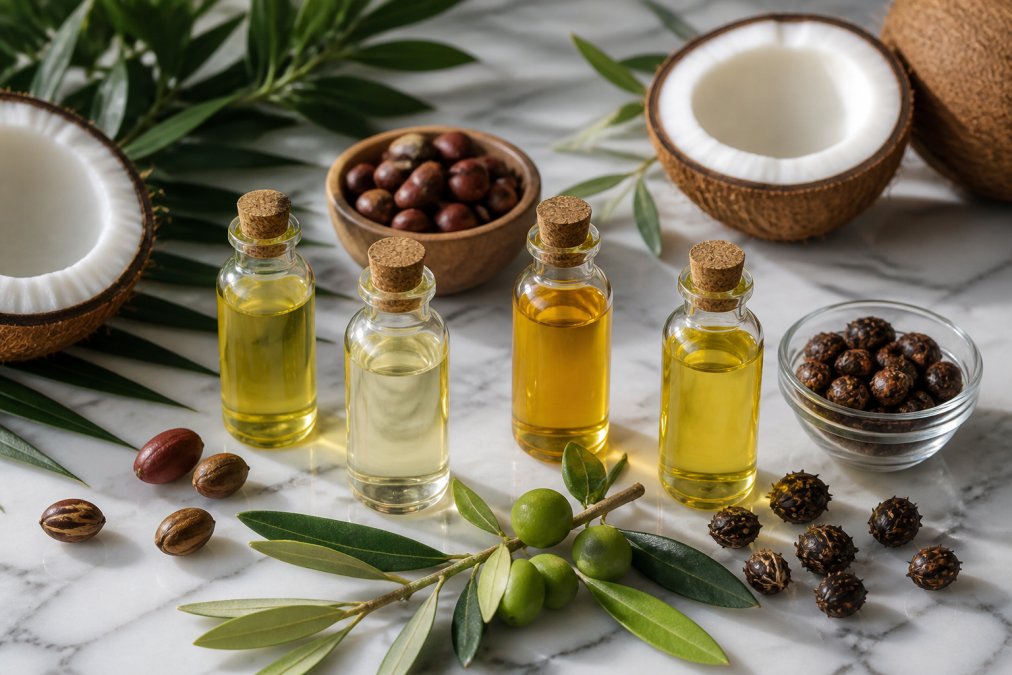
The Giluxe Organic Hair Growth Oil combines botanical oils specifically formulated for breakage repair and dry hair treatment, making it a practical alternative to mixing individual oils at home.

Each oil behaves differently on the hair shaft, and using the wrong one for your hair type can worsen buildup or leave strands feeling coated rather than conditioned.
Oil |
Molecular Weight |
Best For |
How to Use |
|---|---|---|---|
Jojoba |
Light |
All types, low porosity |
Scalp massage, leave-in treatment |
Coconut |
Medium |
High porosity, pre-wash |
Pre-poo treatment, 30 min before wash |
Castor |
Heavy |
Sealing, edges, growth |
Seal after conditioning, small amounts |
Olive |
Medium-heavy |
Coarse, dry, high porosity |
Deep conditioning blend |
Jojoba oil most closely resembles human sebum, making it the most universally compatible option. It absorbs without leaving a greasy residue and works well as a daily leave-in treatment for scalp health and moisture retention.
Coconut oil penetrates the hair shaft rather than sitting on top, making it effective as a pre-wash treatment. Apply it 30 minutes before shampooing to reduce protein loss during washing.
Castor oil is thick and ideal for sealing moisture in after conditioning. Use only a few drops warmed between the palms to coat the ends and seal the cuticle.
Olive oil is rich in antioxidants and works well blended into DIY hair masks. It is heavier than jojoba but lighter than castor, making it a versatile mid-range option for coarse or high-porosity strands.
Deep conditioning is the single most effective intervention for dry brittle hair. A proper deep conditioning session restores the protein-moisture balance the hair needs to stay elastic and resist breakage.
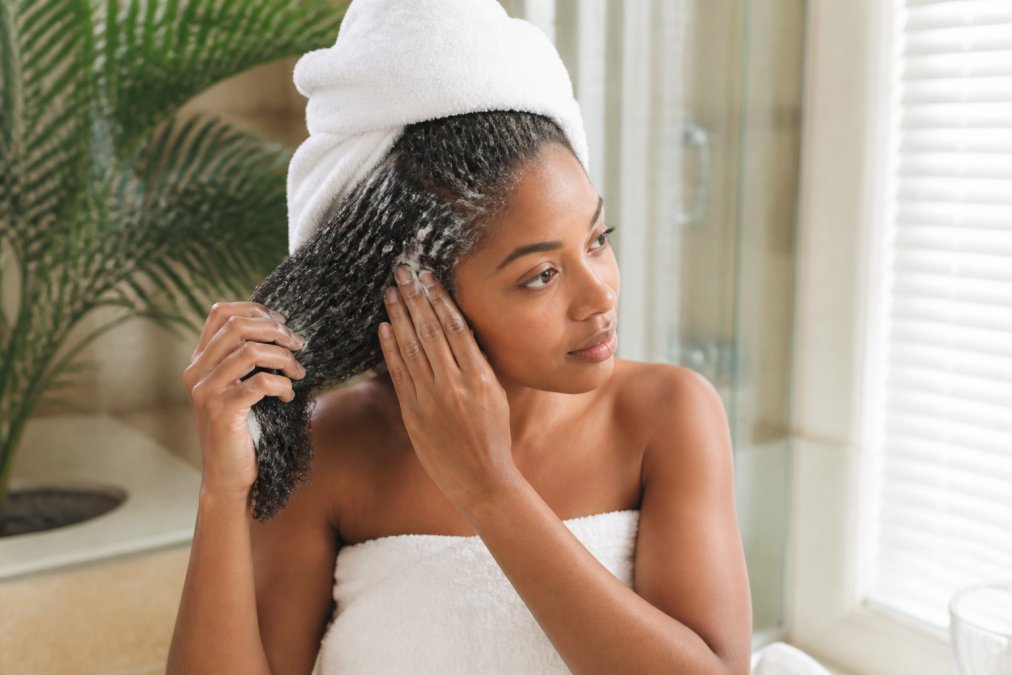
Here is the process that produces consistent results:
Aim to deep condition once per week for severely dry hair, and every two weeks for maintenance once moisture levels improve.
Pantry-based masks can be effective when formulated correctly. Combine a humectant (draws moisture in), a protein source (rebuilds structure), and an oil (seals the result).
Avocado and olive oil mask: Mash half a ripe avocado with two tablespoons of olive oil. Apply to damp hair, cover, and leave for 30 minutes. Avocado provides vitamin E and healthy fats; olive oil seals the cuticle.
Egg and honey mask: Whisk one egg with two tablespoons of honey and one tablespoon of jojoba oil. Honey is a natural humectant that draws moisture into the hair shaft. The egg supplies protein, particularly useful for high-porosity hair that has lost structural integrity.
Most people wash their hair too often, accelerating dryness. Every shampoo strips sebum from the scalp and hair shaft. For already-dry hair, this creates a cycle where the scalp overproduces oil to compensate.

Wash two to three times per week for fine or straight hair, and once per week for coily or highly textured hair. Co-washing, using conditioner instead of shampoo on non-wash days, maintains hydration without stripping. Focus shampoo on the scalp only; the lather that runs down during rinsing provides enough cleansing for the mid-lengths and ends.
The tool you use to dry your hair also affects moisture retention. According to American Academy of Dermatology hair care guidance, rough towel drying damages the hair cuticle and causes frizz. Switch to a microfiber towel or a soft cotton t-shirt, and blot rather than rub. Air drying is the gentlest option; if you must use a dryer, apply a heat protectant first and use the lowest effective heat setting.
Heat damage is cumulative and largely irreversible once it occurs. The hair cuticle can only withstand so much thermal stress before the protein bonds within the shaft begin to break down permanently.
Keep flat irons and curling wands below 375°F for fine or color-treated hair, and below 400°F for coarse or thick strands. Always apply a heat protectant to damp or dry hair before any heated tool touches it. Heat protectants form a barrier that slows heat transfer to the shaft, reducing direct damage.
Protective styling tucks the ends away through braids, twists, buns, and low manipulation styles, reducing the daily friction and environmental exposure that causes breakage. The ends of the hair are the oldest and most fragile part of each strand. Keeping them protected dramatically slows the accumulation of split ends.
Protective styles that are too tight cause traction alopecia over time, a form of hair loss from repeated tension on the follicle. A protective style should never cause scalp tenderness or a pulling sensation at the hairline.
Scalp health is the foundation of hair health. A healthy scalp produces adequate sebum, maintains the right pH balance, and provides the environment follicles need to generate strong, well-structured strands.
Scalp massage, even five minutes per day with fingertips or a silicone brush, increases circulation to the follicle and distributes natural oils along the shaft. Nutrition drives hair structure from the inside out. The hair shaft is primarily composed of keratin, a protein, which means inadequate protein intake directly affects strand strength. Omega-3 fatty acids, found in fatty fish, flaxseed, and walnuts, support sebum production and reduce scalp inflammation. Biotin supports keratin synthesis, and vitamin E functions as an antioxidant that protects follicle cells from oxidative stress.
As noted by National Institutes of Health Office of Dietary Supplements, nutrient deficiencies, particularly in iron, zinc, and B vitamins, are associated with hair thinning and structural weakness. If dietary changes alone are not producing results, a blood panel to check for deficiencies is a worthwhile step before investing further in topical treatments.
Treat the scalp with lighter products than those used on the hair. Heavy oils and butters applied directly to the scalp can clog follicles and worsen dryness over time. Lighter options like jojoba oil or a targeted scalp tonic are better suited for scalp application.
Hair care is not a static routine. The same approach that works in summer will fall short in winter.
Summer: UV exposure degrades the hair cuticle and bleaches color from strands. Protective styles, UV-filtering leave-in treatments, and increased deep conditioning frequency (weekly rather than biweekly) offset this damage.
Winter: Cold air holds very little moisture, and indoor heating compounds this by further drying the environment. Hair becomes more brittle and prone to static. Increasing oil application, using a humidifier indoors, and switching to a richer leave-in treatment during winter months makes a measurable difference.
Spring and fall: These transitional seasons are the best time to reassess your routine. Trim split ends before summer to prevent further splitting under UV stress. In fall, add a clarifying wash to remove summer product buildup before transitioning to heavier winter formulas.
Year-round, trimming every eight to twelve weeks prevents split ends from traveling up the shaft. A trim does not make hair grow faster, but it does prevent the progressive breakage that makes hair appear shorter and thinner over time.
Season |
Key Challenge |
Primary Fix |
Frequency Adjustment |
|---|---|---|---|
Summer |
UV damage, humidity frizz |
UV leave-in, protective styles |
Deep condition weekly |
Winter |
Cold air brittleness, static |
Richer oils, humidifier |
Reduce wash frequency |
Spring |
Residual buildup, dullness |
Clarifying wash, trim |
Reset routine |
Fall |
Transition dryness |
Heavier leave-in, seal ends |
Increase oil application |
The Giluxe Hydrating Tonic for Hair works well as a year-round leave-in treatment, providing botanical hydration between wash days without the heaviness that causes buildup. For a complete approach to both hydration and strengthening, the Giluxe Hydrating Tonic and Hair Growth Oil Duo addresses both moisture retention and follicle support in a single regimen.

For guidance on building a seasonal hair care routine, the American Academy of Dermatology seasonal skin and hair care resources provides practical, dermatologist-reviewed recommendations that apply across hair types.
Dry brittle hair rarely has a single cause, which is why single-product fixes almost never deliver lasting results. The most effective approach combines porosity-matched moisture treatments, protective habits, and nutritional support. Giluxe's botanical formulas, including the Hydrating Tonic for Hair and the Organic Hair Growth Oil, are designed to work together for exactly this kind of multi-layered approach, nourishing strands from scalp to ends without buildup or residue. Add to cart and start building a routine that addresses the real structure of your hair, not just the surface.
With consistent care, hair may gradually feel softer, smoother, and more manageable. Results vary depending on hair type, condition, and routine.
Nutritional factors can sometimes affect the appearance and condition of hair. However, dry or brittle hair can also result from heat styling, chemical processing, environmental exposure, product buildup, and an inconsistent moisture routine. If you are concerned about a possible nutritional deficiency, consider speaking with a qualified healthcare professional.
Jojoba, coconut, castor, and olive oils are popular choices for dry hair. These oils can help condition the hair, reduce the appearance of dryness, improve softness and shine, and help protect strands from moisture loss. The best choice depends on your hair type, texture, and routine.
For dry or brittle hair, deep conditioning once a week is a practical starting point. Depending on your hair type, texture, and level of dryness, you may need to adjust the frequency. Apply the treatment according to the product directions and focus on maintaining softness, moisture, and manageability without weighing down the hair.
This article was written using GrandRanker


