Your cart is empty
Tax included and shipping calculated at checkout

Drawer menu
Tax included and shipping calculated at checkout

Last Updated: August 25, 2026
Botanical hair oil penetrates the hair cuticle rather than sitting on the surface, delivering moisture at the molecular level. When applied, carrier oils and essential fatty acids seal the cuticle layer, trapping existing moisture inside the hair shaft. This restores the hair's capacity to hold water, which is why botanical hydration outperforms lighter alternatives for brittle ends, frizz, and dull appearance.
Hair loses moisture through cuticle gaps, especially in dry climates or after heat styling. Botanical oils fill those gaps and smooth the cuticle down. Oleic acid, palmitoleic acid, and other fatty acids found in plant-based oils mirror your scalp's natural sebum, so your hair recognizes and absorbs them rather than rejecting them as foreign substances (peer-reviewed research). This is why botanical hair oil for deep hydration works across all hair types, from fine and straight to coarse and textured.
Hair porosity determines how quickly and how much your hair can absorb moisture and oils. This is the single most important factor in choosing the right botanical hair oil for deep hydration and application frequency.
Porosity exists on a spectrum: low, medium, and high. Low-porosity hair has tightly sealed cuticles that resist moisture absorption. Medium-porosity hair accepts moisture readily and retains it well. High-porosity hair has gaps in the cuticle that allow moisture to enter quickly but also escape just as fast.
To test your porosity, take a strand of clean hair and drop it in a glass of room-temperature water. If it sinks immediately, you have high porosity. If it floats at the surface, you have low porosity. If it hovers somewhere in the middle, you have medium porosity.
For low-porosity hair, lightweight botanical oils like argan oil and jojoba oil work better than heavy ones, which can create buildup. For high-porosity hair, denser oils like castor oil and olive oil provide the deep hydration needed because they take longer to escape through open cuticles. Medium-porosity hair tolerates most botanical oils well.
The most effective botanical hair oil for deep hydration contains three ingredient categories: carrier oils, essential fatty acids, and botanical extracts.
Carrier oils make up the base of any botanical hair oil. Jojoba oil sits at the top of most professional recommendations because its molecular structure most closely resembles human sebum (peer-reviewed research). It absorbs quickly without leaving a greasy finish, making it ideal for low-porosity and fine hair. Argan oil offers similar benefits with added antioxidants that protect hair from environmental damage and heat styling stress.
Coconut oil provides heavier hydration and works best for high-porosity and coarse hair. Olive oil delivers oleic acid, a key fatty acid for scalp nourishment and hair repair. Castor oil is the densest option, packed with ricinoleic acid and proteins that strengthen brittle ends and support hair growth.
Most premium botanical hair oils combine two to four carrier oils rather than relying on a single base. Giluxe's Organic Hair Growth Oil combines rosemary, castor oil, olive oil, jojoba oil, argan oil, and coconut oil, a multi-carrier strategy that addresses hydration, strength, and scalp health in one formula.

Essential fatty acids are the reason botanical oils actually repair damaged hair rather than just coating it. Oleic acid, found abundantly in olive oil and argan oil, penetrates the hair shaft and strengthens the protein structure from within (peer-reviewed research). Palmitoleic acid, present in macadamia nut oil and sea buckthorn oil, supports the scalp's natural lipid barrier and promotes hair growth.
When a botanical hair oil for deep hydration lists these fatty acids on its label, it signals that the formula targets actual hair repair, not just surface conditioning.
The most effective botanical hair oil for deep hydration includes plant extracts that target scalp health. Rosemary extract improves circulation and supports hair growth. Ginger and cinnamon warm the scalp and promote nutrient delivery to hair follicles. Tea tree oil addresses scalp conditions like dryness and irritation. Vitamin E protects against oxidative stress and extends the life of the oil itself by preventing rancidity.
Giluxe's formulations include rosemary, ginger, cinnamon, clove, and avocado seed extract alongside the carrier oils. This botanical mix addresses multiple concerns simultaneously: the rosemary supports growth, the ginger and cinnamon boost circulation, and the avocado seed adds additional fatty acids for deep hydration.
Application technique determines whether your botanical hair oil for deep hydration actually penetrates or simply coats your hair.
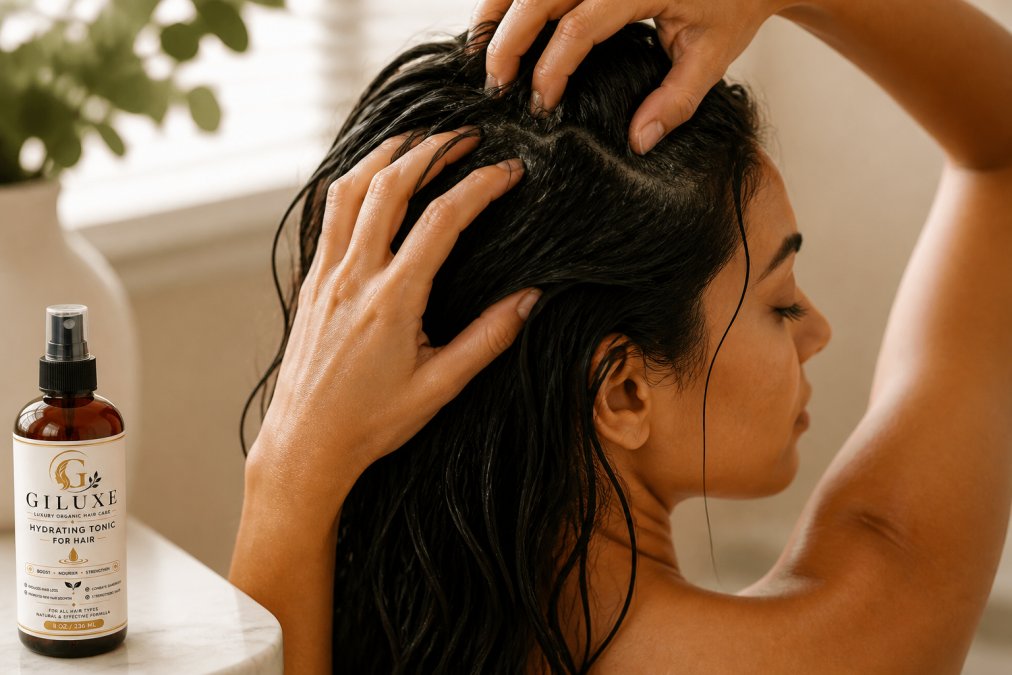
Start with damp hair, not soaking wet and not completely dry. Towel-dry your hair until it stops dripping, then apply the oil. Dispense the oil into your palms and warm it between your hands for 5-10 seconds. Warm oil absorbs faster than cold oil because heat opens the cuticle further.
Section your hair into four quadrants and apply oil to the scalp first, using your fingertips to massage in slow, circular motions for 2-3 minutes. After the scalp, work the oil through the mid-lengths and ends using a wide-tooth comb to distribute evenly and detangle simultaneously.
Leave the oil in for 20-30 minutes minimum. For deeper hydration, leave it on for 1-2 hours or even overnight. Longer contact time increases absorption, especially for high-porosity hair.
Low-porosity hair needs minimal oil and shorter contact time. Apply a lighter oil like jojoba or argan, leave it on for 15-20 minutes, then shampoo thoroughly. Low-porosity hair resists absorption, so extended contact time won't help.
Medium-porosity hair tolerates standard application: warm oil, 20-30 minute contact, then shampoo.
High-porosity hair benefits from heavier oils and longer contact time. Apply castor oil or a blend heavy in castor oil, leave it on for 1-2 hours or overnight, then shampoo. High-porosity hair needs the extra time and density because moisture escapes quickly through open cuticles.
For all porosity types, use less oil than you think you need. A quarter-sized amount for shoulder-length hair is usually sufficient.
How often you should apply botanical hair oil for deep hydration depends on your hair type, porosity, and lifestyle.

For low-porosity hair, once weekly is typically sufficient. For medium-porosity hair, twice weekly works well. For high-porosity hair, 2-3 times weekly is often necessary because moisture escapes quickly.
Climate also matters. In dry environments or winter, increase frequency by one application per week. In humid climates or summer, you may need less frequent oiling because moisture is more available from the environment.
Listen to your hair. If it feels dry and brittle after 4-5 days, increase frequency. If it looks greasy after 2-3 days, decrease frequency.
Different botanical oils target different problems. Matching the right oil to your specific concern increases the likelihood of seeing results.
Brittle ends result from moisture loss and protein degradation at the hair shaft. Castor oil and olive oil are the top choices because they're rich in proteins and oleic acid, which strengthens the hair structure from within. Argan oil also excels at end repair because it contains vitamin E and antioxidants that protect against further damage.
Apply these oils primarily to the bottom third of your hair, where breakage concentrates. Leave the oil on for at least 30 minutes. For severe breakage, consider a weekly deep conditioning treatment using castor oil or a blend heavy in castor oil. Giluxe's Organic Hair Growth Oil includes castor oil alongside other strengthening botanicals, making it well-suited for breakage repair.
Frizz occurs when the cuticle is raised and moisture escapes, or when humidity causes the cuticle to swell unevenly. Lightweight oils that smooth the cuticle work best: jojoba oil, argan oil, and grapeseed oil.
Apply these oils sparingly to damp hair after shampooing. A few drops worked through the mid-lengths and ends seal the cuticle and prevent frizz. The Giluxe Hydrating Tonic for Hair, applied after shampooing, provides lightweight hydration that reduces frizz without the greasiness of traditional oils.

Hair growth starts at the scalp. Oils that improve scalp circulation and nourishment support healthier hair growth. Rosemary oil is the most research-backed botanical for this purpose, known for improving blood flow to hair follicles. Peppermint oil and ginger oil have similar warming properties that boost circulation.
Apply growth-focused oils directly to the scalp, massaging in circular motions to increase blood flow. Leave the oil on for at least 20 minutes, but overnight application is ideal. Consistent weekly application over 2-3 months is necessary to see visible results in hair thickness and growth rate.
Giluxe's Organic Hair Growth Oil combines rosemary with castor oil, olive oil, and other botanicals specifically designed for scalp nourishment and hair strength.
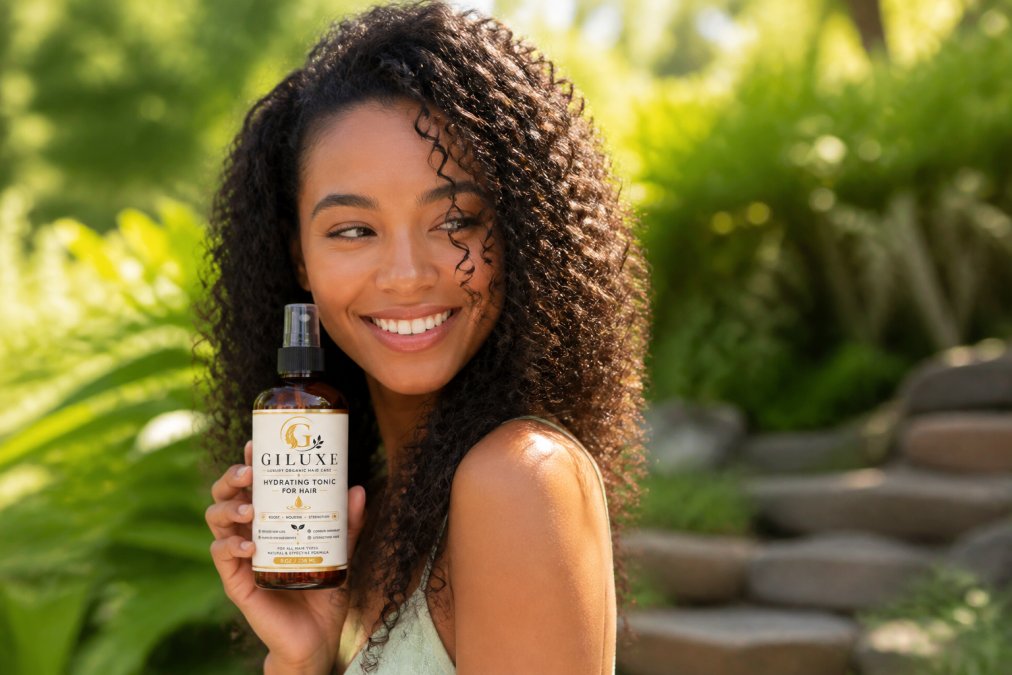
The best botanical hair oil for deep hydration comes from brands that prioritize sustainable sourcing and transparent ingredient practices. Look for certifications that verify sustainable sourcing: Fair Trade, USDA Organic, or third-party certifications from organizations like the Rainforest Alliance.
Cold-pressed oils require less processing, which preserves the essential fatty acids and botanical compounds that make the oil effective. Check whether the brand specifies cold-pressed or unrefined on the label.
Packaging matters too. Glass bottles protect the oil from oxidation better than plastic, extending shelf life and maintaining potency. Giluxe sources botanical ingredients with attention to sustainability and quality, using cold-pressed oils and organic-inspired botanical extracts.
Making your own botanical hair oil seems cost-effective, but commercial formulations offer safety and consistency advantages that matter for regular use.
DIY oils require careful handling of essential oils, which are highly concentrated and can irritate skin at full strength. Getting the dilution ratio right takes knowledge. Too much essential oil can cause scalp irritation or allergic reactions.
Shelf life is another DIY challenge. Homemade oils lack preservatives and oxidize faster. Rancid oil can irritate the scalp and lose its hydrating properties. Commercial formulations include stabilizers and antioxidants that extend shelf life safely.
Quality control is easier with established brands. Commercial manufacturers test their products for purity, potency, and safety. For most people, purchasing a botanical hair oil for deep hydration from a reputable brand is safer, more convenient, and ultimately more cost-effective because the product delivers consistent results and lasts longer without oxidizing.
Dry, brittle hair signals that your scalp and strands are depleted of moisture and essential nutrients. The right botanical hair oil for deep hydration restores that balance, but choosing one that matches your porosity and applying it correctly makes all the difference. Giluxe's Organic Hair Growth Oil ($24.99) combines rosemary, castor oil, olive oil, jojoba oil, argan oil, and coconut oil, a multi-botanical blend designed to nourish your scalp, reduce breakage, and deliver lasting hydration across all hair types. Start with weekly applications and adjust frequency based on how your hair responds. For a complete routine, pair it with the Hydrating Tonic for Hair ($21.99) to refresh and hydrate between oil treatments, or invest in the Hydrating Tonic & Hair Growth Oil Duo ($42.98) for a full botanical hair care system that addresses both immediate hydration and long-term scalp health.
A: Botanical hair oils contain natural carrier oils and plant extracts rich in essential fatty acids, oleic acid, and palmitoleic acid that penetrate the hair cuticle and scalp. Unlike silicone-based products, they absorb into the hair shaft to deliver genuine moisture retention and nourishment. Botanical formulations support scalp health and hair vitality without synthetic buildup, making them ideal for those seeking natural alternatives for deep hydration.
A: Hair oiling frequency depends on your hair type and porosity. Low-porosity hair benefits from weekly applications, while medium and high-porosity hair may need 2-3 times weekly. Start with once weekly and adjust based on how your hair feels. If you notice greasiness, reduce frequency; if dryness persists, increase it. Lightweight formulas like the Giluxe Hydrating Tonic ($21.99) work for daily use without buildup, while deeper oils like the Organic Hair Growth Oil ($24.99) suit weekly intensive treatments.
A: Yes, lightweight botanical oils specifically formulated for fine hair can hydrate without weighing strands down. Look for non-greasy formulas with lower viscosity that absorb quickly. The Giluxe Hydrating Tonic is designed as a fast-drying spray that refreshes and hydrates without heaviness, making it suitable for all hair types including fine and thin textures. Apply sparingly to mid-lengths and ends rather than the scalp to avoid flatness.
A: Prioritize carrier oils like jojoba, argan, coconut, and castor oil for their moisture-binding properties and essential fatty acids. Botanical extracts such as rosemary, ginger, and tea tree support scalp nourishment and hair growth. Vitamin E provides antioxidant protection. The Giluxe Organic Hair Growth Oil combines these ingredients, rosemary, castor oil, olive oil, jojoba oil, argan oil, coconut oil, and tea tree oil, to deliver comprehensive hydration, scalp health, and breakage repair in one formula.
This article was written using GrandRanker


