Your cart is empty
Tax included and shipping calculated at checkout

Drawer menu
Tax included and shipping calculated at checkout

Last Updated: September 4, 2026
Curly hair is structurally prone to dryness because its spiral shape makes it difficult for natural oils from the scalp to travel down the hair shaft (peer-reviewed research). Unlike straight strands that act as a slick slide for sebum, each bend and turn in a curl creates a barrier, leaving the ends parched and the cuticle raised. This guide explains how to hydrate dry curly hair through a layered routine that prioritizes water-based moisture and botanical sealants, moving beyond heavy creams alone.
The most effective approach treats hydration as a multi-step ritual. A common mistake is reaching for thick butters first, which sit on the surface without addressing the underlying lack of water.
The primary culprit behind dry curls is the shape of the hair follicle itself. The natural oils produced by your scalp, known as sebum, have a difficult journey down a twisted strand, so the mid-lengths and ends rarely receive the nourishment they need. This inherent structural challenge is compounded by environmental factors like low humidity, hard water minerals, and harsh sun exposure, which accelerate moisture loss.
Porosity, the hair's ability to absorb and retain moisture, determines which products and techniques will work for your hair.
Low-porosity hair has a tightly sealed cuticle that resists water absorption. Signs include heavy curls, slow drying, or dullness after conditioning. This hair type benefits from lightweight, water-based products and gentle heat to open the cuticle. Protein-heavy products can cause buildup and straw-like texture.
High-porosity hair has a raised, open cuticle that absorbs water readily but loses it quickly. Signs include dryness despite conditioning, easy frizz, or breakage when wet. This hair type needs moisture-rich products with humectants (like aloe vera) plus heavier sealants like oils to lock in hydration.
Normal porosity falls between the two and generally responds well to a balanced routine of lightweight leave-ins and medium-weight oils.
To determine your porosity, place a clean shed strand in room-temperature water. If it sinks immediately, you have high porosity; if it floats, low porosity; if it hovers in the middle, normal porosity.
Beyond structure and porosity, external conditions and internal health directly impact how dry your curls become.
Hard water minerals bind to the hair shaft, preventing water and conditioner from penetrating. Signs include buildup, dullness, or frizz. A monthly clarifying shampoo or shower filter can help.
Humidity levels affect dryness: low humidity pulls moisture from hair, while high humidity can cause frizz in low-porosity hair. Adjust product weights seasonally, lighter products in summer, richer sealants in winter.
Diet and hydration affect curl health. Adequate water intake, omega-3 fatty acids, and B vitamins support healthy sebum production. If hair remains dry despite a solid routine, ensure you are drinking enough water and eating foods rich in healthy fats like avocados and nuts.
Heat styling and sun exposure accelerate moisture loss and degrade curl structure. Limit heat use, wear UV-protective accessories, and use products with UV filters.
Washing technique sets the foundation for every styling step that follows. The goal is to cleanse the scalp without stripping the strands of their fragile moisture barrier. This means focusing the shampoo exclusively on the roots, where buildup and excess oil accumulate, and letting the suds rinse through the lengths without aggressive scrubbing.
Before shampooing, detangle with your fingers or a wide-tooth comb while dry to prevent matting. Use lukewarm water; hot water encourages frizz, while cool water seals hydration.
The final rinse is critical. Apply conditioner, leave for several minutes, then rinse with cool water to close the cuticle and boost shine.
Most curly and coily types benefit from washing once or twice per week (the American Academy of Dermatology). Over-washing strips natural oils and triggers excess sebum production, leaving strands parched.
For very tight coils or extremely dry hair, co-washing (conditioning only) between clarifying washes gently removes debris without harsh detergents. If hair feels tight or looks dull by day three, you may be washing too frequently.
Oils seal water into the strand; they are not the primary moisture source. Applying oils to dry hair without prior hydration worsens dryness. Apply them to damp hair to trap moisture.
Selecting the wrong oil can lead to buildup, greasiness, or continued dryness. Understanding your porosity before choosing an oil is critical.
For low-porosity hair, choose lightweight oils like jojoba, which mimics sebum and penetrates sealed cuticles, or argan oil, rich in vitamin E. Apply sparingly, a dime-sized amount for shoulder-length hair, to avoid greasiness.
For high-porosity hair, choose richer oils like coconut oil, which reduces protein loss, or castor oil, which seals the cuticle. Shea butter provides moisture and protection. Apply more generously, up to a quarter-sized amount, because high-porosity hair needs extra weight to retain hydration.
For normal porosity, a balanced approach works best. Argan oil, jojoba oil, or a blend of lighter oils applied to damp hair provides hydration without buildup.
Apply oils to damp hair after leave-in conditioner and hydrating tonic, but before fully drying. Applying oil to dry hair prevents it from sealing in moisture.

Warm oil between your palms for 3-5 seconds to increase fluidity. Gently press into mid-lengths and ends, avoiding roots. For tight or flaky scalps, apply sparingly to the scalp.
Apply oil before diffusing so heat seals it into the cuticle, or apply before air-drying to lock in hydration.
Jojoba oil mimics sebum and absorbs quickly without greasiness; ideal for fine or low-porosity curls. Argan oil is rich in vitamin E and works well for most porosity types. Coconut oil penetrates deeply and reduces protein loss; best for high-porosity, thick, or coily hair. Castor oil seals moisture and supports scalp health. Shea butter provides hydration and protection for thick, coily, or high-porosity hair. Vitamin E oil protects against UV damage and environmental stress.
Never apply oil to completely dry hair; it will repel water. Avoid excess oil, which causes buildup and greasiness. For low-porosity hair, use lightweight oils like jojoba or argan, not heavy coconut or castor. Always apply water-based hydration before oil; oil alone will not solve dryness.
A hydrating routine layers products in a specific order to maximize absorption. Start with water, add a water-based leave-in, and finish with oil to seal.
Sulfates strip natural oils, leaving curly hair feeling like straw (dermatologytimes.com). A sulfate-free cleanser gently removes dirt and buildup while preserving moisture balance.
Leave-in conditioners hold water against the hair shaft. Apply while hair is soaking wet, not damp; water carries conditioning agents deep into the cortex. Use generously and distribute evenly.
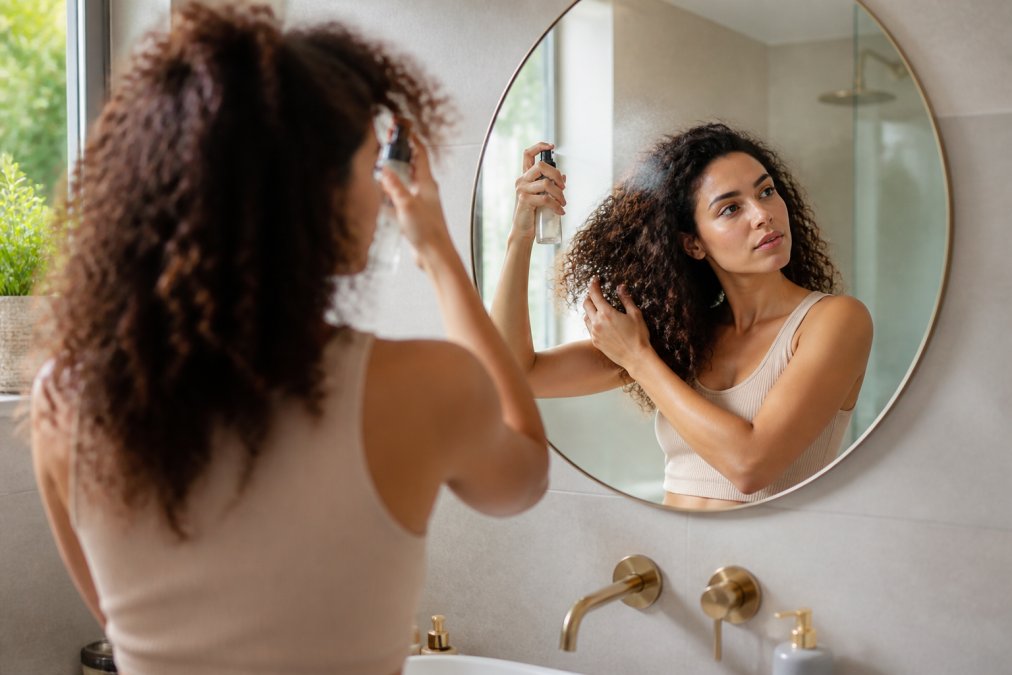
A lightweight hydrating tonic delivers water-soluble ingredients like aloe vera without weighing curls down. The Giluxe Hydrating Tonic for Hair is a fine mist formulated to instantly hydrate the scalp and hair, improving manageability and softness.
Seal moisture with oil to prevent evaporation. Warm oil between palms and gently press into lengths and ends. The Giluxe Organic Hair Growth Oil, with its blend of botanical oils, helps moisturize the scalp and reduce breakage while locking in hydration.

Cotton towels cause frizz and breakage. Use a microfiber towel to gently squeeze and blot excess water. If blow-drying, use a diffuser on low heat and low speed.
Common errors include applying styling products to dry hair, which prevents moisture from reaching the cortex, and using products with high alcohol content, which evaporates and pulls moisture.
Skip weekly deep conditioning and you lose intensive hydration that daily conditioners cannot match. Cotton pillowcases absorb moisture and cause friction; switch to satin or silk to preserve hydration.
Pineapple your curls (gather into a loose, high ponytail) to minimize friction. Sleep on a satin pillowcase to reduce moisture loss and prevent frizz.
Between washes, spritz with water or a hydrating tonic to reactivate styling products and extend wash-day results.
Hydrating dry curly hair requires a consistent, layered system that respects your hair's structure. By washing gently and applying moisture to soaking-wet hair before sealing with oils, you achieve lasting softness, definition, and shine.
The right products make this ritual effortless. Giluxe offers a curated collection of botanical-infused formulas, including the Hydrating Tonic for Hair and the Organic Hair Growth Oil, designed to nourish and strengthen textured hair without heavy buildup. Elevate your daily self-care and give your curls the premium hydration they deserve by exploring the Giluxe collection today.
Curly hair is naturally drier because sebum (natural oils) travels down the hair shaft less easily on curved strands compared to straight hair. Porosity, how well your hair absorbs and retains moisture, plays a key role. High-porosity curls absorb water quickly but struggle to retain it; low-porosity curls resist moisture absorption. Understanding your hair's porosity helps you choose the right hydration products. High-porosity curls benefit from oil sealers, while low-porosity curls need lightweight, water-based hydrators to avoid buildup.
Most curly hair types benefit from deep conditioning once weekly or every two weeks, depending on dryness severity and porosity. High-porosity curls may need weekly treatments to lock in moisture, while low-porosity curls might only need every two weeks to avoid product buildup. During dry seasons or after heat styling, increase frequency. Watch for signs: if your curls feel straw-like, lack elasticity, or break easily, boost deep conditioning to weekly. Always follow with a hydrating leave-in conditioner to seal moisture into the hair cuticle.
Aloe vera, coconut oil, jojoba oil, argan oil, and shea butter are proven hydrators for curly hair. Aloe vera is a humectant that draws moisture into the hair; coconut oil and argan oil seal that moisture. Jojoba oil mimics the scalp's natural sebum and won't leave curls greasy. Shea butter provides emollients for softness and frizz control. Rosemary supports scalp health and circulation. Vitamin E protects curls from environmental damage. Look for products combining multiple botanicals to address moisture, elasticity, and breakage prevention simultaneously.
Use a hydrating tonic or water-based spray to reactivate curls on day two or three. Mist damp curls lightly, then scrunch upward to restore definition. A lightweight leave-in conditioner can also refresh without weighing curls down. Avoid heat styling; instead, use a diffuser attachment on low heat if you must dry. At night, protect curls with a silk or satin pillowcase or bonnet to prevent frizz and moisture loss. This refresh approach extends your wash cycle, reduces heat exposure, and maintains hydration between full washes.
This article was written using GrandRanker


