Your cart is empty
Tax included and shipping calculated at checkout

Drawer menu
Tax included and shipping calculated at checkout

Last Updated: September 7, 2026
Organic skincare is not inherently safe for acne, because many natural, plant-based oils are highly comedogenic and can trigger breakouts. "Natural" and "acne-safe" are two entirely different standards. This guide from Giluxe breaks down the chemistry of pore-clogging oils, identifies the ingredients that actually help, and shows you how to build a routine that treats your breakouts without sacrificing your skin barrier health.
The same botanical oils that nourish dry skin can cause severe congestion in acne-prone skin. We will explain why this happens, which natural ingredients are proven to fight acne, and how to transition safely without causing a purge.
Organic skincare products rely on plant-derived oils, butters, and extracts instead of synthetic chemicals. For acne-prone skin, the primary benefit is active botanicals like tea tree oil, green tea extract, and niacinamide, which reduce inflammation and regulate sebum production. However, the base of most organic formulas is a carrier oil, and that is where the trouble begins.
The effectiveness of an organic product for acne depends less on its certification and more on its formulation. A product can be certified organic and still clog pores, while a well-formulated organic product with the right actives can be highly effective. Comedogenicity, not organic status, determines whether a product will cause breakouts.
The real culprit behind organic products causing acne is the overuse of heavy, pore-clogging oils. Many organic brands prioritize rich, buttery textures that feel luxurious but suffocate acne-prone skin. 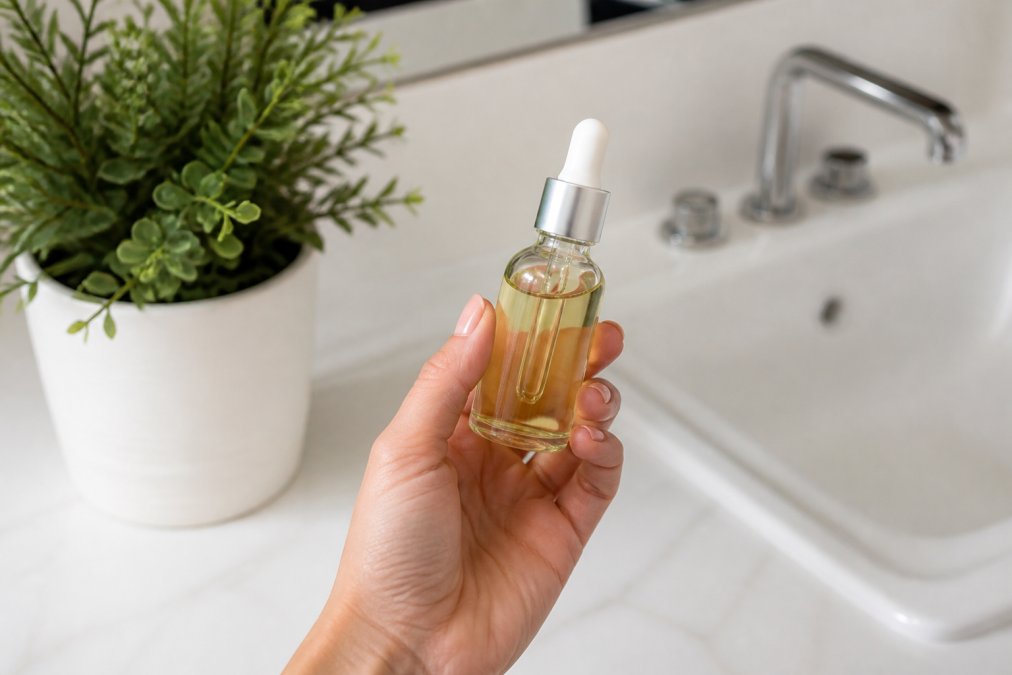
A common mistake is assuming that because an oil is cold-pressed or unrefined, it is safe for your skin. The molecular structure of the oil, specifically its fatty acid profile, determines its comedogenicity. If you are prone to breakouts, evaluate the base oils before you consider the active ingredients.
The chemistry comes down to two fatty acids: oleic acid and linoleic acid. Oils high in oleic acid, such as olive oil, coconut oil, and avocado oil, are thick and can trap dead skin cells and sebum in the follicle. Acne-prone skin is often deficient in linoleic acid, so oils high in this fatty acid, like grapeseed or safflower oil, can actually help normalize the skin's lipid barrier.
Most articles tell you to avoid "pore-clogging" oils but never give you the actual scale to check your own products. Here is the reference table that fills that gap. The standard comedogenic scale runs from 0 (will not clog pores) to 5 (highly likely to clog pores) (peer-reviewed research). These ratings are based on the classic rabbit-ear assay and subsequent human patch testing, and they remain the most widely cited reference in dermatology and cosmetic chemistry.
| Oil or Butter | Comedogenic Rating | Fatty Acid Profile | Acne-Prone Skin Verdict |
|---|---|---|---|
| Grapeseed oil | 1 | High linoleic acid | Safe; lightweight and balancing |
| Safflower oil | 0-1 | High linoleic acid | Safe; good carrier oil |
| Hemp seed oil | 0-1 | Balanced linoleic/oleic | Safe; anti-inflammatory |
| Squalane (plant-derived) | 0-1 | Not a triglyceride | Safe; mimics skin's own sebum |
| Jojoba oil | 2 | Wax ester, not a triglyceride | Generally safe; closely mimics human sebum |
| Argan oil | 1-2 | Mostly oleic acid | Use with caution; better for dry skin |
| Sunflower oil | 0-1 | High linoleic acid | Safe; soothing |
| Sweet almond oil | 2 | High oleic acid | Moderate risk; may congest sensitive skin |
| Avocado oil | 2-3 | High oleic acid | Higher risk; avoid in leave-on products |
| Olive oil | 2-3 | Very high oleic acid | Higher risk; can disrupt barrier and clog pores |
| Coconut oil | 4-5 | High oleic acid, lauric acid | High risk; avoid on face entirely |
| Cocoa butter | 4-5 | High oleic and stearic acid | High risk; avoid in facial products |
| Wheat germ oil | 5 | High oleic acid | High risk; avoid |
When you pick up an organic moisturizer or serum, scan the ingredient list for the base oils listed before any active botanicals. Ingredients appear in descending order of concentration. If the first or second ingredient is coconut oil, cocoa butter, or wheat germ oil, the product is likely to clog your pores regardless of the beneficial extracts listed afterward.
Avoid oils that sit on the skin's surface rather than absorbing. Coconut oil, cocoa butter, and wheat germ oil have some of the highest comedogenic ratings. If these appear as the first or second ingredient in an organic moisturizer, the product will likely clog your pores.
The comedogenic rating of a single oil does not tell the whole story. A heavy oil diluted to less than 5% of a water-based gel may be perfectly safe, while the same oil as the primary base of a balm will cause congestion. Also, "organic" does not mean "unrefined", refined versions of some oils have lower comedogenic ratings. Look for products that list squalane, grapeseed, or hemp seed oil as their primary emollient, and avoid anything where coconut oil or cocoa butter appears in the top three ingredients.
Several botanicals have demonstrated real antimicrobial and anti-inflammatory properties that help manage acne. Tea tree oil is one of the most studied natural treatments, offering effects comparable to lower-strength benzoyl peroxide but with less irritation (PubMed). Green tea extract is rich in antioxidants that calm redness and reduce sebum production.
For a natural routine to work, you need ingredients that target the root causes of acne: bacteria, inflammation, and excess oil. Look for witch hazel as a toner, niacinamide to regulate sebum, and aloe vera to soothe irritation. These ingredients address the skin's biology rather than just coating the surface.
Building a routine that works requires a strict focus on non-comedogenic organic skincare. Check every product label for the comedogenic rating of its base oils and ensure that no ingredient scores above a 2 on the standard scale. This is the single most important filter for acne-prone skin.
Your routine should be simple: a gentle cleanser, a targeted treatment, and a lightweight, non-comedogenic moisturizer. Avoid multi-step routines with heavy creams and facial oils, as these increase the risk of congestion. Support the skin barrier without overwhelming it.
Start with a cleansing bar formulated with clarifying botanicals. For instance, the Giluxe Radiance Facial Cleansing Soap is designed to remove impurities and excess oil while supporting a clearer appearance, thanks to ingredients like Tea Tree Oil and Turmeric. This step addresses surface oil without stripping the skin.

After cleansing, apply a treatment containing an active ingredient like salicylic acid or benzoyl peroxide if your skin tolerates it. Then, finish with a water-based moisturizer or one using a non-comedogenic oil like squalane. This provides hydration without the pore-clogging weight of heavy butters.
A significant hidden risk in organic skincare is the preservative system. Products labeled "preservative-free" are a red flag for acne-prone skin because they often rely on high concentrations of essential oils or alcohol to prevent microbial growth, both of which cause irritation and disrupt the microbiome.
The FDA regulates cosmetics, but the term "organic" on a beauty product is not strictly enforced as it is for food. Look for safe, broad-spectrum preservatives like phenoxyethanol or potassium sorbate, which prevent contamination without irritating sensitive skin. A product truly free of synthetic preservatives will have a very short shelf life and may harbor bacteria that worsen acne.
Before applying any new organic product to your face, you must perform a patch test to avoid a full-face reaction. Apply a small amount behind your ear or along your jawline, which has skin similar to your face. Do this once daily for at least seven days to observe any delayed reaction.
Most dermatologist-recommended patch tests detect allergic contact dermatitis, which typically appears within 24 to 48 hours. Acne is a different reaction pathway. Pore-clogging (comedogenesis) takes longer because it requires a buildup of dead skin cells, sebum, and the ingredient inside the follicle. A 48-hour test will catch irritation but miss a comedogenic reaction that takes 5 to 14 days to form a visible whitehead or papule.
Phase 1: The 7-Day Behind-the-Ear Test
Apply a pea-sized amount of the product to a 1-inch area behind your ear or along your jawline, right below the earlobe. This skin has a similar follicle density and sebum production to your face. Apply once daily, at the same time each day, and do not wash the area for at least 6 hours after application. Observe for:
If any of these appear within the 7-day window, stop testing and do not use the product on your face.
Phase 2: The Single-Lesion Provocative Test
If the 7-day test is clear, move to a targeted test on an active breakout. Choose one pimple or blackhead that is already present. Apply a thin layer of the product only to that single lesion once daily for 3 to 5 days. This is the most sensitive test for comedogenicity because an active follicle is already inflamed and vulnerable. Monitor for:
If the breakout worsens or new lesions appear within 48 hours of starting Phase 2, the product is likely comedogenic for your skin chemistry.
If you experience a reaction during either phase, stop using the product immediately. Wash the area with a gentle, non-comedogenic cleanser and apply a light layer of aloe vera gel or a squalane-based moisturizer. Do not pick or squeeze any resulting bumps, as this increases inflammation and the risk of post-inflammatory hyperpigmentation.
Even after passing both patch test phases, introduce the product to your full face gradually. Use it once every other day for the first week, then daily if your skin remains clear. A full 2-week trial is the minimum period to judge compatibility, because your skin's cell turnover cycle takes approximately 14 days. If you see no new breakouts after 14 days, the product is likely safe for your acne-prone skin.
This protocol prevents the frustration of a full-face purge caused by an incompatible oil blend. It also lets you experiment with organic products systematically, rather than guessing and risking a flare-up that takes weeks to resolve.
The most effective approach for persistent acne is combining natural support with clinically proven treatments. Natural ingredients can soothe irritation and support the skin barrier, but they may not clear moderate to severe acne on their own. Dermatologists often recommend ingredients like adapalene or benzoyl peroxide, which have strong clinical efficacy.
The synergy works like this: use your clinical treatment to target acne lesions, and use a gentle, non-comedogenic organic moisturizer to repair the skin barrier that the treatment may compromise. This combination allows you to tolerate stronger actives while minimizing side effects like dryness and flaking. American Academy of Dermatology guidelines on acne management recommend a similar layering approach for optimal results.
Organic skincare can be a valuable part of an acne management plan, but only if you choose formulas with non-comedogenic bases and proven active ingredients. The decision comes down to ingredient literacy, not marketing claims. Focus on the fatty acid profile of oils, the preservative system, and clinically supported botanicals.
Our [Giluxe(/pages/about-giluxe) Radiance Facial Cleansing Soap | giluxeshop.com] offers a clarifying cleanse with Tea Tree Oil and Turmeric to support clearer-looking skin. Start with our Radiance Facial Cleansing Soap and pair it with a lightweight moisturizer to see how your skin responds.
Some organic skincare causes acne because it contains plant-based oils high in oleic acid, like olive oil and coconut oil. These oils have a higher comedogenic rating, meaning they can clog pores for some people. Additionally, essential oils can irritate the skin barrier, leading to inflammation and breakouts. Always check the ingredient list and patch test a new product for several days before applying it to your entire face.
Yes. Willow bark extract is a natural source of salicylic acid, offering similar exfoliating benefits for clearing pores. Tea tree oil is a well-studied natural alternative to benzoyl peroxide, with antimicrobial properties that fight acne-causing bacteria. Green tea extract provides antioxidant and anti-inflammatory support. These natural ingredients for acne can be effective, though they may work more gently and slowly than their clinical counterparts.
Look for the term "non-comedogenic" on the label, but also check the ingredient list for oils with low comedogenic ratings. Favor oils high in linoleic acid, such as jojoba oil, sunflower seed oil, or hemp seed oil, which are less likely to clog pores. Avoid products with high oleic acid oils like olive oil, coconut oil, or almond oil as primary ingredients. When in doubt, a patch test is the most reliable way to see how your skin reacts.
Organic skincare is not automatically better or worse for acne-prone skin; it depends on the formulation. The benefit is the absence of harsh synthetic chemicals that can strip the skin barrier. However, natural ingredients can still be comedogenic or irritating. The key is choosing non-comedogenic organic skincare with proven ingredients like tea tree oil or niacinamide, and introducing new products slowly to monitor your skin's reaction.
Choosing the right organic skincare for acne requires patience and careful label reading. The challenge is finding products that deliver botanical benefits without the pore-clogging oils that cause breakouts. Giluxe offers a premium, botanical-based solution that focuses on deep hydration and gentle clarification, designed to support your skin's health without compromising your routine. Get started with Giluxe and experience a routine that treats your acne with the sophistication it deserves.


