Your cart is empty
Tax included and shipping calculated at checkout

Drawer menu
Tax included and shipping calculated at checkout

Last Updated: August 27, 2026
A healthy scalp is the foundation of strong, vibrant hair. When your scalp thrives, your hair grows stronger and breaks less easily. Your scalp contains thousands of hair follicles, each requiring consistent moisture, circulation, and the right botanical nutrients to function optimally. When buildup accumulates and sebum production becomes imbalanced, those follicles weaken, hair becomes brittle, and growth slows.
Organic hair products for scalp health address the root cause rather than just treating symptoms. Plant-based ingredients work with your scalp's natural biology instead of against it, supporting your scalp microbiome, the delicate ecosystem of beneficial microorganisms that keep your scalp balanced and healthy. A common misconception is that stronger hair comes from heavy conditioners or protein treatments. In reality, it starts with a clean, balanced, well-nourished scalp.

Your scalp is a living ecosystem with its own microbiome, pH balance, and delicate chemistry. The scalp microbiome consists of beneficial bacteria and fungi that protect your scalp from harmful pathogens and maintain balance (peer-reviewed research). When this ecosystem is disrupted by harsh sulfates, synthetic fragrances, or buildup, inflammation follows.
Sebum production is your scalp's natural moisturizing system. The problem arises when buildup and product residue trap sebum against the scalp, creating an environment where irritation thrives. Silicones, sulfates, and synthetic polymers accumulate layer by layer over weeks and months, leaving hair dull, limp, and prone to breakage.
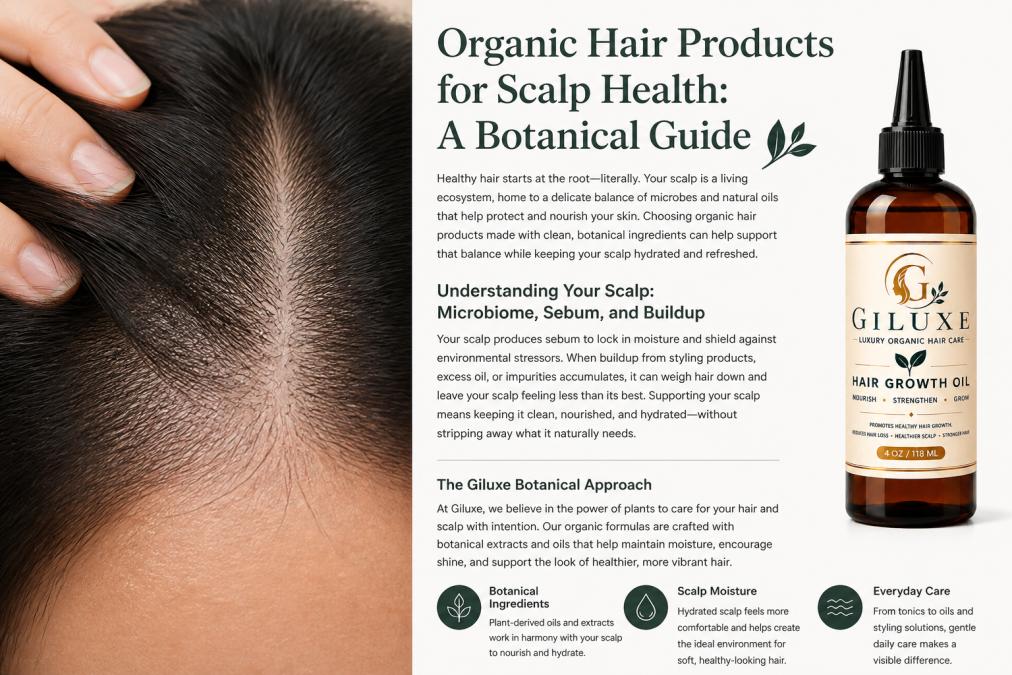
Flaking and visible dandruff are the most obvious signs. Itching that persists even after shampooing indicates irritation or inflammation. If your hair feels greasy just hours after washing, or conversely, feels perpetually dry and straw-like, your scalp's moisture balance is off. Excessive hair shedding during brushing suggests your follicles aren't anchored properly. Thinning hair, visible redness, or unusual odor are signs that inflammation or bacterial imbalance has taken hold.
The good news: all of these are reversible with consistent care using the right organic hair products for scalp health.
A healthy scalp is often invisible, it doesn't itch, doesn't flake, and doesn't feel tight or overly oily. Your hair grows steadily, breaks less, and has natural shine without needing heavy products. A healthy scalp feels soft and supple to the touch with no tenderness or sensitivity. Most importantly, a healthy scalp supports consistent, strong hair growth.
The power of organic hair products for scalp health lies in their botanical composition. Plant-based actives work synergistically with your scalp's biology.
Rosemary oil supports scalp circulation and promotes a healthy scalp environment. Ginger adds warming properties that encourage blood flow to the scalp, supporting nutrient delivery to hair follicles. Clove oil helps soothe irritation and maintain a balanced scalp microbiome. These botanical extracts penetrate the scalp barrier more effectively than synthetic fragrances because they're naturally compatible with your skin's chemistry.
When selecting organic hair products for scalp health, look for products that list these botanical extracts clearly in the ingredient list. Giluxe's Organic Hair Growth Oil combines these key botanicals to create a formula that nourishes without residue.
Carrier oils are the delivery system for botanical benefits, rich in fatty acids and vitamins your scalp and hair need.
Jojoba oil is remarkably similar to your scalp's natural sebum, making it ideal for balancing moisture without adding heaviness. Argan oil is rich in vitamin E and antioxidants, protecting your scalp from environmental stress while providing deep hydration. Castor oil is thicker and more nourishing, ideal for very dry scalps. Avocado oil contains potassium and lecithin, supporting the scalp barrier and reducing inflammation.
A well-formulated product combines carrier oils with essential oils and botanical extracts so each ingredient amplifies the others. Quality matters more than ingredient count.
Dry scalp requires restoring its natural moisture-retention capacity. If you're using harsh sulfate shampoos, your scalp is likely stripped of protective oils. Switch to a gentle, sulfate-free cleanser that removes buildup without destroying your scalp's natural barrier.
Next, introduce moisture strategically. A lightweight hydrating tonic applied directly to the scalp after shampooing helps lock in water. Giluxe's Hydrating Tonic for Hair is formulated to refresh and hydrate the scalp without leaving residue. Apply it to damp scalp, massage gently, and let it absorb before styling.

For intensive moisture, use a scalp oil treatment 1-2 times weekly. Apply to a dry or damp scalp, massage thoroughly, and leave it on for at least 30 minutes (or overnight for maximum benefit). Giluxe's Organic Hair Growth Oil combines jojoba, argan, and castor oils with botanical extracts to create deep hydration that lasts.
Gentle exfoliation 1-2 times weekly removes dead skin cells and product residue that prevent moisture from reaching your scalp. Use a soft brush or your fingertips with a gentle exfoliating scrub, never harsh particles that damage the scalp barrier. After exfoliation, your scalp is primed to absorb hydrating treatments more effectively.
Scalp massage stimulates blood flow, supporting nutrient delivery to hair follicles and promoting a healthier scalp environment. Spend 5 minutes daily massaging your scalp with your fingertips using gentle, circular motions. Apply light to moderate pressure, never aggressive scrubbing. For added benefit, perform scalp massage while applying a hydrating tonic or oil.
Organic hair oil serves multiple functions when chosen thoughtfully. Organic oils penetrate the hair shaft, reinforcing its structure from within, reducing breakage and improving elasticity. On the scalp, they restore moisture balance, support the microbiome, and reduce inflammation. Unlike silicone-based products that coat the hair surface, botanical oils work with your hair's natural structure.
The key is selecting oils that absorb rather than accumulate. A well-balanced organic hair oil adjusts viscosity and absorption to work across different hair types. Giluxe's Organic Hair Growth Oil demonstrates this principle, combining carrier oils that absorb efficiently with botanical extracts that support scalp health. Applied regularly to the scalp and hair, it reduces dryness, strengthens strands, and supports a healthier scalp environment without weighing hair down.
A sustainable scalp care routine requires consistency and the right products.
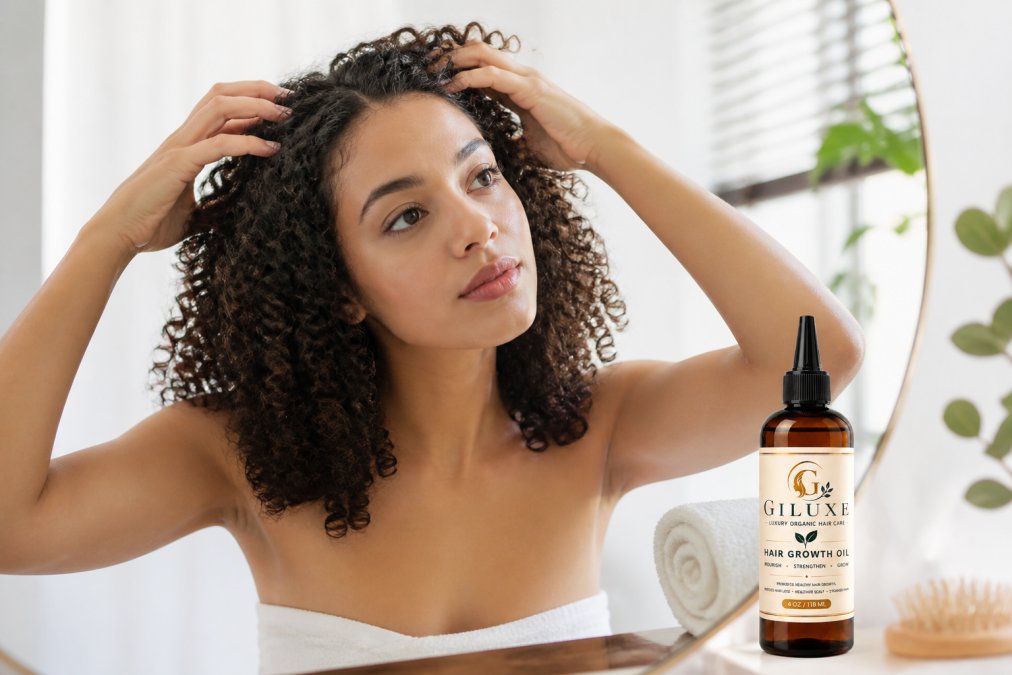
Your daily routine should be simple: cleanse gently and hydrate. Use a sulfate-free shampoo that removes buildup without stripping. Follow with a lightweight hydrating tonic applied directly to the scalp. Once weekly, perform a deeper treatment by applying an organic scalp oil to damp hair, massaging for 5 minutes to stimulate circulation, and leaving it on for at least 30 minutes.
| Step | Frequency | Duration | Product Type |
|---|---|---|---|
| Gentle cleanse | Daily | 3-5 min | Sulfate-free shampoo |
| Hydrating tonic | Daily | 2-3 min | Lightweight spray or liquid |
| Scalp massage | Daily | 5 min | With fingers or soft brush |
| Deep oil treatment | 1-2x weekly | 30+ min | Organic scalp oil |
| Gentle exfoliation | 1-2x weekly | 5 min | Soft scrub or brush |
Sulfates strip your scalp of protective oils, triggering overproduction of sebum. Parabens can disrupt your scalp microbiome. Synthetic fragrances often irritate sensitive scalps. Silicones accumulate on the scalp and hair, creating buildup that prevents moisture absorption. Harsh alcohols dry out both scalp and hair.
The shift to organic hair products for scalp health means eliminating these ingredients entirely. Your scalp will thank you within weeks.
If you prefer to create your own treatments, several simple combinations work effectively.
Avocado and jojoba mask: Blend half an avocado with 2 tablespoons of jojoba oil and 3 drops of rosemary essential oil. Apply to damp scalp and leave for 20-30 minutes. Avocado provides potassium and fatty acids; jojoba balances moisture; rosemary supports circulation.
Ginger and argan treatment: Mix 1 tablespoon of grated ginger with 3 tablespoons of argan oil and 2 drops of clove oil. Warm gently, apply to scalp, and leave for 30 minutes. The ginger encourages blood flow; argan deeply nourishes; clove soothes irritation.
Coconut and castor oil: Combine 2 tablespoons of coconut oil with 1 tablespoon of castor oil and 5 drops of rosemary essential oil. This is thicker and more intensive, ideal for very dry scalps. Leave on for 45-60 minutes or overnight.
Professionally formulated products like Giluxe's offerings are engineered for optimal absorption and efficacy, with precise botanical ratios and base oils selected for stability and absorption.
Not all scalps are the same. Your specific concern shapes which products and techniques work best.
Use a hydrating tonic daily to provide immediate moisture and lock in water from your shampoo. Add a weekly deep oil treatment with emphasis on carrier oils like jojoba and argan. Reduce shampooing frequency if possible; washing 2-3 times weekly rather than daily gives your scalp time to stabilize. Avoid products with alcohol and heavy silicone-based conditioners.
Giluxe's Hydrating Tonic for Hair is specifically designed for this, hydrating without residue. When paired with weekly treatments using Organic Hair Growth Oil, it addresses both immediate symptoms and underlying moisture deficit.
Thinning hair often signals that follicles aren't receiving adequate nourishment or circulation. Daily 5-minute scalp massages stimulate blood flow to follicles, supporting nutrient delivery. Use an organic scalp oil during massage to combine circulation stimulation with botanical nourishment. Ingredients like rosemary and ginger are particularly relevant here, as they're traditionally used to support scalp circulation.
Ensure your diet includes adequate protein, iron, and B vitamins. Topically, focus on products that support the scalp environment. Realistic expectations matter: healthy follicles produce stronger hair that breaks less, creating the appearance of fuller, thicker hair over time.
Irritated, inflamed scalps require soothing, anti-inflammatory support. Avoid all harsh products, sulfates, synthetic fragrances, and strong actives. Switch to the gentlest possible shampoo, ideally one formulated for sensitive scalps. Use hydrating tonics and oils with soothing botanicals like clove and ginger.
Reduce treatment frequency temporarily. Once your scalp stabilizes, gradually return to your normal routine. Giluxe's Organic Hair Growth Oil, with its blend of soothing botanicals and nourishing carrier oils, is well-suited for this phase. Consider whether external factors like new hair products, frequent heat styling, or tight hairstyles are contributing to irritation.
A healthy scalp is the non-negotiable foundation of strong, beautiful hair. It requires consistent care with the right products, ones that work with your scalp's biology rather than against it. Organic hair products for scalp health aren't a luxury; they're an investment in lasting results.
Start by assessing your current scalp condition. Are you experiencing dryness, flaking, irritation, or thinning? Once you understand your specific concern, you can tailor your routine accordingly. Giluxe's collection of botanical-infused formulas, from the Hydrating Tonic for daily hydration to the Organic Hair Growth Oil for weekly deep nourishment, is designed to address these concerns comprehensively. Explore the full range and discover how the right scalp care routine transforms your hair and your entire self-care experience.

A: A dry scalp often shows visible flaking, itching, or tightness, especially after shampooing. You might notice white flakes on your hair or shoulders, or feel discomfort when touching your scalp. Healthy scalp feels supple and hydrated, without dryness or excessive oil. If your scalp feels tight or itchy, or if your hair looks dull despite regular washing, your scalp likely needs more moisture. Organic hair products with jojoba oil, argan oil, and botanical extracts can help restore hydration to your scalp and improve overall hair health.
A: Organic hair oils nourish the scalp microbiome, reduce inflammation, and strengthen hair from the root. Plant-based oils like castor oil, argan oil, and jojoba oil penetrate the scalp barrier to deliver vitamins and fatty acids without synthetic chemicals or heavy buildup. These oils help balance sebum production, soothe irritation, and support healthier-looking hair. Unlike conventional products with sulfates and parabens, organic hair oils work with your scalp's natural biology to reduce dryness, flaking, and breakage while promoting follicle stimulation and stronger strands.
A: Yes. Botanical extracts like rosemary, ginger, and clove have been used for centuries to soothe scalp irritation and improve circulation. Vitamin E and essential oils support the scalp barrier and reduce inflammation that causes dryness. When combined in organic formulas, these plant-based ingredients work synergistically to moisturize, detoxify, and rejuvenate the scalp. The key is consistency: natural treatments work best as part of a regular scalp care routine. Sulfate-free and paraben-free products are gentler on sensitive scalps and allow your skin's natural microbiome to rebalance.
A: Most people benefit from using a hydrating hair tonic 2-3 times per week and a nourishing scalp oil 1-2 times weekly, though frequency depends on your scalp type and dryness level. If your scalp is very dry or flaky, you may start with more frequent applications and adjust as hydration improves. Apply products to the scalp and massage gently to boost circulation. For best results, incorporate both hydrating tonics and oils into your weekly routine alongside gentle cleansing with sulfate-free products. Consistency matters more than frequency, regular use allows botanical ingredients to restore scalp health over time.
This article was written using GrandRanker


